Tram 28 alternatives in Lisbon
Skip the worst queues with practical Tram 28 alternatives in Lisbon, including quieter tram routes, walking routes and better viewpoints.
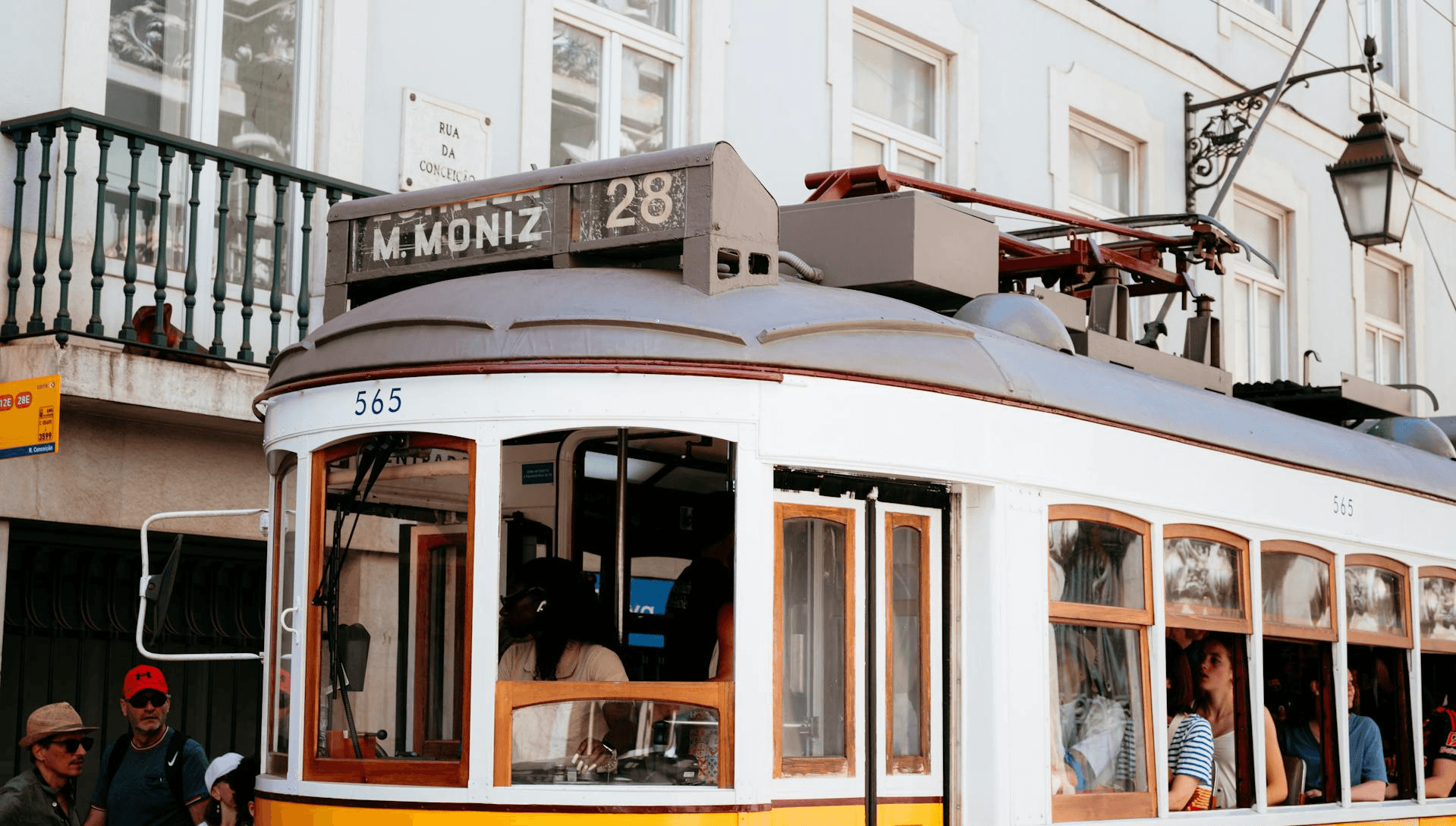
Tram 28 is one of Lisbon’s most famous public transport routes. It passes through some of the city’s most interesting old neighbourhoods, including Graça, Alfama, Baixa and Estrela.
In this article, you’ll find the best Tram 28 alternatives in Lisbon, including other tram routes, walking routes, viewpoints and public transport options that can help you avoid the longest queues.
Why look for an alternative to Tram 28?
Tram 28 is popular for a reason. It is scenic, historic and useful if you want to see several classic Lisbon areas in one ride.
But it also has a few problems.
It can be very crowded, especially from late morning to afternoon. The queues at Martim Moniz can be long, and once you get inside, you may not get a seat. In busy periods, the ride can feel less like a relaxed city experience and more like standing in a moving postcard with 40 other people doing the same thing.
Tram 28 is still worth considering, but it is not the only good way to enjoy Lisbon’s hills, viewpoints and old streets.
Quick answer: what is the best alternative to Tram 28?
The best alternative to Tram 28 is usually Tram 12, especially if you want a shorter ride through historic Lisbon.
Tram 12 passes near places like Portas do Sol, Miradouro de Santa Luzia, Lisbon Cathedral and Chiado, making it a good option if your main goal is to see the old city without doing the full Tram 28 route.
If you prefer to walk, a route from Graça to Alfama and Baixa can give you a better experience than sitting on a packed tram.
1. Take Tram 12 instead
Tram 12 is one of the easiest alternatives to Tram 28.
It does not cover the same full route, but it still passes through some of the most beautiful parts of old Lisbon. According to Carris, route 12E runs from Martim Moniz to Praça Luís de Camões, passing stops such as Portas do Sol, Miradouro de Santa Luzia, Sé and Chiado.
This makes it useful if you want to see the Alfama and castle area without spending too much time on the tram.
Tram 12 is especially good if you want to combine a short tram ride with walking.
You could take it up towards Portas do Sol or Santa Luzia, then walk down through Alfama towards the river.
Best for
Tram 12 is best for visitors who want a shorter and simpler tram ride through the old city.
Good stops to know
Martim Moniz
Portas do Sol
Miradouro de Santa Luzia
Sé
Chiado
Praça Luís de Camões
Suggested plan
Take Tram 12 towards the old town, get off near Portas do Sol or Santa Luzia, then explore Alfama on foot.
You can combine it with the guides to Miradouro de Santa Luzia, Miradouro das Portas do Sol and Lisbon Cathedral.
2. Walk from Graça to Alfama
If you want the best version of the Tram 28 experience, walking may actually be better.
A walk from Graça down to Alfama gives you many of the same views and neighbourhoods, but with more freedom. You can stop at viewpoints, take side streets, visit churches, get coffee and move at your own pace.
A good route could be:
Start at Miradouro da Graça
Walk to Miradouro da Senhora do Monte
Return towards Graça
Continue towards Portas do Sol
Stop at Miradouro de Santa Luzia
Walk down through Alfama
Finish near Lisbon Cathedral or the river
This route includes some of the most scenic parts of the Tram 28 area, but you are not stuck inside a crowded tram.
Best for
This is best if you like walking and want a more relaxed way to see Lisbon’s old neighbourhoods.
Good to know
Lisbon is hilly, so wear comfortable shoes. The walk is not difficult if you take your time, but there are slopes, stairs and uneven pavements.
You can link this route naturally with what to see in Graça, what to see in Alfama and the best viewpoints in Lisbon.
3. Take Tram 25 to Estrela and Campo de Ourique
Tram 25 is another good alternative, especially if you want to see a different side of Lisbon.
It is less focused on Alfama and Graça, and more useful for areas like Santos, Lapa, Estrela and Campo de Ourique. According to Carris, route 25E runs between Praça da Figueira and Campo Ourique (Prazeres), passing areas such as Praça do Comércio, Cais do Sodré, Santos, Lapa and Estrela.
This route is a good option if you want a classic tram ride but do not need to follow the exact tourist route of Tram 28.
It can also work well if you plan to visit Basílica da Estrela, Jardim da Estrela or Campo de Ourique.
Best for
Tram 25 is best for visitors who want a traditional tram ride through quieter, elegant neighbourhoods.
Good stops to know
Praça da Figueira
Praça do Comércio
Cais do Sodré
Santos
Lapa
Estrela
Campo de Ourique
Suggested plan
Take Tram 25 towards Estrela, visit the basilica and garden, then continue towards Campo de Ourique for lunch or a slower neighbourhood walk.
4. Use the metro and walk the scenic parts
You do not need to ride a tram to enjoy Lisbon’s best areas.
One of the simplest alternatives is to use the metro to get close to the old centre, then walk the most scenic sections.
For example:
Take the metro to Baixa-Chiado
Walk to Lisbon Cathedral
Continue towards Miradouro de Santa Luzia
Visit Portas do Sol
Walk up or across to Graça
This gives you more control over your time. You can stop where you want, avoid the queues, and skip sections that feel too crowded.
It is also a good option if Tram 28 or Tram 12 has service changes.
Best for
This is best if you want flexibility and do not mind walking uphill.
Good to know
The metro does not go directly into Alfama or Graça, so you will still need to walk. But that walk is part of the experience.
For transport basics, read how to use public transport in Lisbon.
5. Start Tram 28 away from Martim Moniz
If you still want to ride Tram 28, one simple trick is to avoid starting at Martim Moniz.
Martim Moniz is the most famous starting point, so it often has the longest queues.
Instead, you can try boarding at another stop along the route. This does not guarantee a seat, and at busy times the tram may already be full. But it can sometimes be easier than waiting in the main queue.
Another option is to ride a shorter section instead of doing the full route.
For example, you could use it for one part of the journey, then continue on foot.
Best for
This is best if you want to experience Tram 28 but do not want to spend too much time waiting.
Good to know
If the tram is full, you may not be able to board. Have a backup plan, especially in high season.

6. Visit the same areas without the tram
Many people want Tram 28 because they want to see the places along the route, not because they specifically need the tram.
If that is your case, build a walking route instead.
A strong route could include:
Graça
Senhora do Monte
Portas do Sol
Santa Luzia
Alfama
Lisbon Cathedral
Baixa
Chiado
This gives you many of the same highlights, but with more time to enjoy each stop.
It also works better for photos, food stops and viewpoints.
Best for
This is best if you care more about seeing the neighbourhoods than riding the tram itself.
Suggested route
Start in Graça, walk down through Alfama, then finish in Baixa or Chiado.
This direction is easier because more of the route is downhill.
7. Take a bus for the practical part
Sometimes the best Tram 28 alternative is not another tram. It is a bus.
Lisbon buses can be useful if you need to reach a specific area without waiting for a packed tram. They are not always as scenic, but they are often more practical.
For example, if you just need to get from the city centre to Estrela, Graça or Campo de Ourique, check public transport apps and compare the bus options.
Carris also provides route information and service updates online, which is useful because tram routes can have temporary changes.
Best for
This is best if you care more about getting around than having the classic tram experience.
Good to know
Buses can also get busy, but they usually have more space than the historic trams.
8. Combine one tram ride with walking
This is often the best overall option.
Instead of trying to do the full Tram 28 route, use a tram for a short section and walk the rest.
For example:
Take Tram 12 to Santa Luzia or Portas do Sol
Walk down through Alfama
Continue to Lisbon Cathedral
Finish in Baixa or by the river
Or:
Take Tram 25 towards Estrela
Visit Jardim da Estrela
Walk towards Campo de Ourique
Return by bus, metro or taxi
This gives you the fun part of the tram without making the whole day depend on it.
Best Tram 28 alternatives by travel style
If you want the closest tram alternative
Choose Tram 12.
It covers a shorter route through historic Lisbon and passes close to several classic viewpoints and monuments.
If you want fewer crowds
Choose Tram 25 or a walking route.
Tram 25 takes you through different neighbourhoods and can feel less tourist-heavy than Tram 28.
If you want the best views
Walk from Graça to Alfama.
This gives you more time at the viewpoints and avoids the packed tram problem.
If you have limited time
Use the metro to reach Baixa or Chiado, then walk towards Alfama and Santa Luzia.
This is usually faster and more flexible than waiting for Tram 28.
If you still want to ride Tram 28
Try going early in the morning or later in the day, and consider boarding away from Martim Moniz.
Are Tram 28 alternatives cheaper?
Usually, the ticket cost is similar if you are using normal public transport tickets.
Carris trams, buses and the metro can be used with the right Navegante ticket or zapping credit.
A 24-hour Carris/Metro ticket can be useful if you plan to use several forms of transport in one day, including trams, buses, metro and funiculars.
You can read more in Lisbon 24-hour transport ticket: is it worth it?.

Common mistakes to avoid
1. Waiting too long for Tram 28
If the queue is very long, do not build your whole day around it. Choose Tram 12, walk from Graça, or use the metro and continue on foot.
2. Taking Tram 28 at the busiest time
Late morning and afternoon are usually the busiest times. If you really want to ride it, go early or later in the day.
3. Thinking Tram 28 is the only scenic route
It is not. Lisbon has many streets, viewpoints and tram routes that are just as enjoyable, especially if you like walking.
4. Forgetting about service changes
Tram routes in Lisbon can change because of works or disruptions. Check the Carris website or app before planning your route.
5. Ignoring pickpocket risk
Crowded trams are places where pickpockets can operate. Keep your phone and wallet secure, especially on busy routes.
Final thoughts
Tram 28 is famous, but it is not the only way to enjoy old Lisbon.
If the queue is short and you really want the classic ride, go for it. But if it is packed, you have better options. Tram 12 gives you a shorter route through the historic centre. Tram 25 takes you through Estrela, Lapa and Campo de Ourique. Walking from Graça to Alfama gives you the views, streets and atmosphere at your own pace.
For most visitors, the best plan is simple: do not depend only on Tram 28. Have an alternative route ready, and your day in Lisbon will probably be smoother.
FAQ
1. What is the best alternative to Tram 28 in Lisbon?
Tram 12 is usually the best alternative if you want another tram route through the historic centre. A walking route from Graça to Alfama is also a very good option.
2. Is Tram 12 the same as Tram 28?
No. Tram 12 is shorter and follows a different route, but it still passes near places like Portas do Sol, Santa Luzia, Lisbon Cathedral and Chiado.
3. Is Tram 25 worth taking?
Yes, especially if you want to visit Estrela, Lapa, Santos or Campo de Ourique. It is a good alternative if you want a tram ride away from the main Tram 28 crowds.
4. Can you walk the Tram 28 route?
You can walk many of the best parts, especially around Graça, Alfama, Portas do Sol, Santa Luzia, Baixa and Chiado. The full route is long, but shorter sections are very doable.
5. When is the best time to ride Tram 28?
Early morning is usually best. Later in the day can also be better than late morning or afternoon, but it depends on the season and service conditions.

Rafael Rocha
The Author
Having lived and studied in Lisbon for many years, a deep connection to the city grew naturally over time. Here I share practical guides and local recommendations to help you experience Lisbon better.
Buy me a coffee