Lisbon sardine festival 2026: a tourist guide
A practical guide to Lisbon’s Sardine Festival in 2026, including Santos Populares, grilled sardines, street parties, June 12 and local tips.
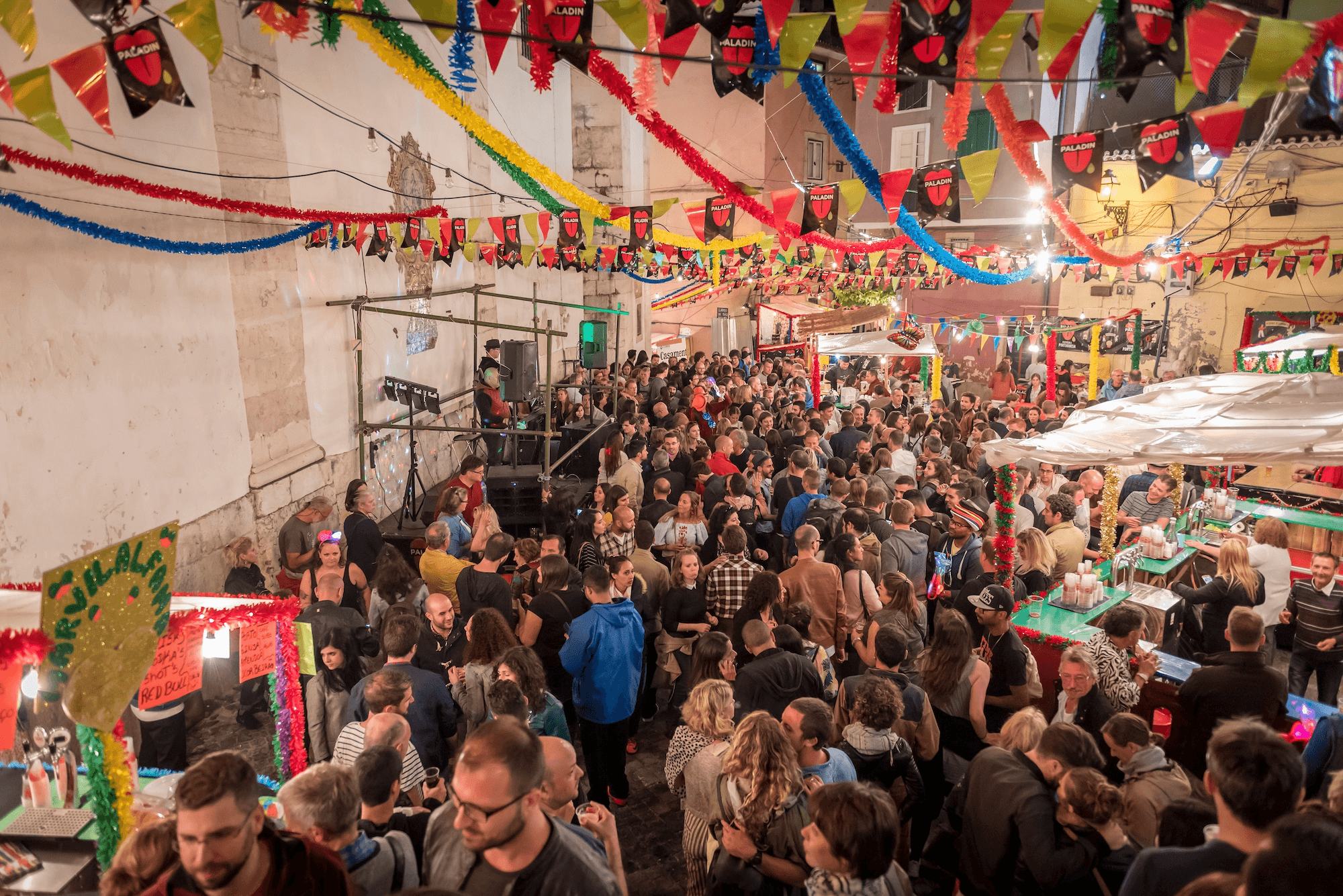
Many visitors hear about the “Lisbon Sardine Festival” before they know its real local name. The phrase makes sense: every June, the smell of grilled sardines takes over Lisbon’s old neighbourhoods, especially during the city’s Santos Populares celebrations.
But there is one important thing to know first: Lisbon does not really have one official event called the Lisbon Sardine Festival. What most travellers are looking for is Santos Populares, Lisbon’s June festival season, with Santo António as the main celebration in the capital.
In this article, you’ll find out what people usually mean by Lisbon Sardine Festival, when it happens in 2026, where to go, what to eat, how it connects to Santos Populares and what tourists should know before joining the celebrations.
For the full festival overview, read our guide to Santos Populares Lisbon 2026. If you are planning around the biggest night, our guide to Santo António Festival in Lisbon explains what happens on 12 June.
Quick facts
Local name: Santos Populares / Santo António Festival
Tourist search term: Lisbon Sardine Festival
Main night: 12 June 2026
Municipal holiday in Lisbon: 13 June, Saint Anthony’s Day
Main parade: Marchas Populares, Avenida da Liberdade, 9pm
Best areas: Alfama, Graça, Mouraria, Bica, Madragoa and Santos
Classic food: grilled sardines, bifanas, caldo verde, roasted peppers and bread
Best tip: bring cash, wear comfortable shoes and choose one main neighbourhood
Is there really a Lisbon Sardine Festival?
Not officially. The “Lisbon Sardine Festival” is the name many tourists use for Lisbon’s Santos Populares celebrations, especially because grilled sardines are everywhere during the festival.
The main night is 12 June 2026, the eve of Saint Anthony’s Day. This is when Lisbon celebrates Santo António with street parties, grilled sardines, music, dancing and the Marchas Populares parade on Avenida da Liberdade.
So if you are searching for the Lisbon Sardine Festival, you probably want to experience Santos Populares in Lisbon.
When is the Lisbon Sardine Festival in 2026?
The main night is Friday, 12 June 2026, leading into Saturday, 13 June, Saint Anthony’s Day.
The Marchas Populares are listed by Visit Lisboa for 12 June at 9pm on Avenida da Liberdade, with free entry. The closest metro stations for the parade area are Marquês de Pombal, Avenida and Restauradores.
The 13th of June is Saint Anthony’s Day and a municipal holiday in Lisbon. Many neighbourhood parties usually happen during the first half of June, especially in the days leading up to 12 June, but exact programmes vary by year and are often confirmed closer to the date.
Why are sardines so important in Lisbon in June?
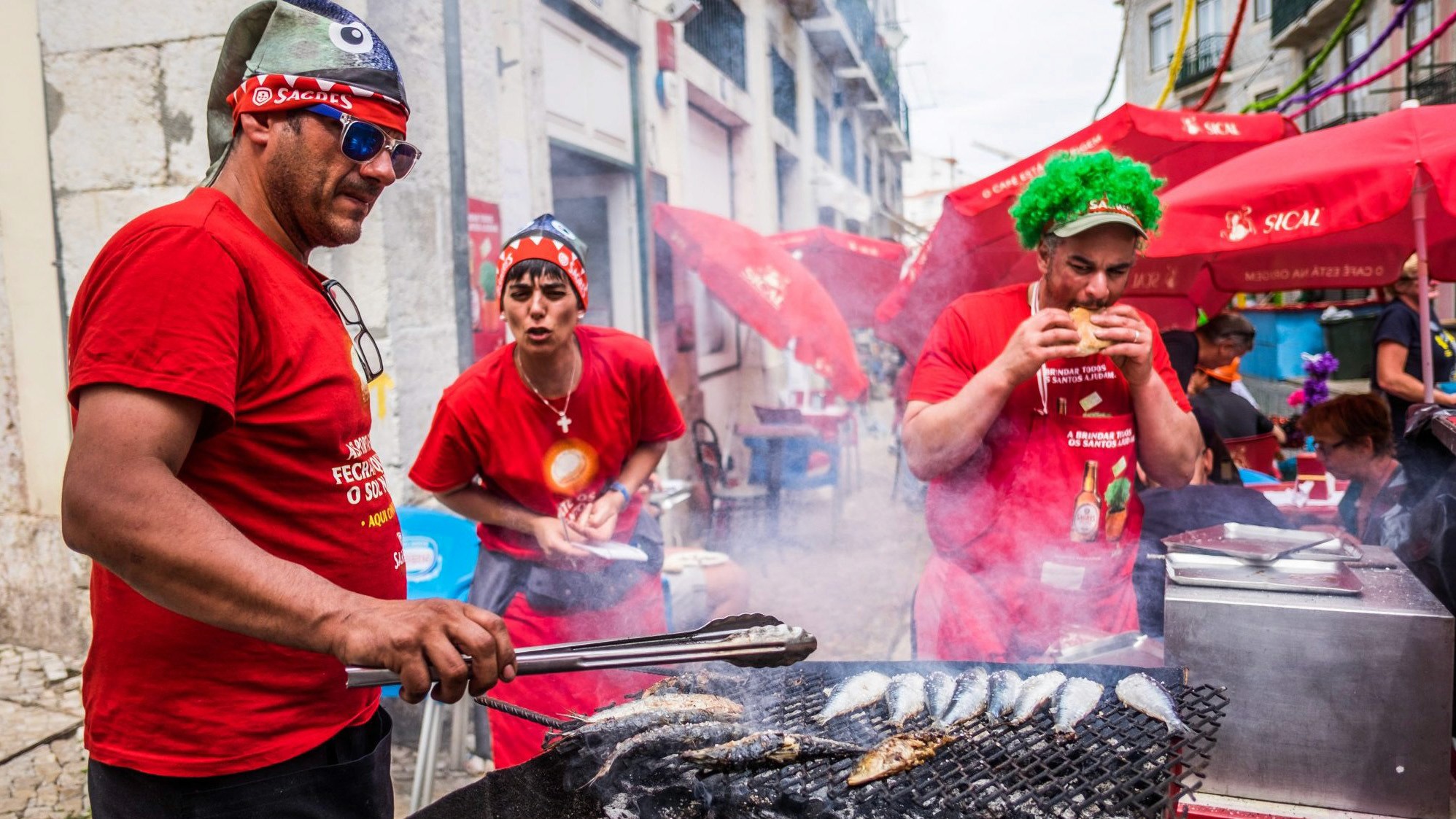
Sardines are one of the clearest symbols of Santos Populares in Lisbon. During the festival, they are grilled outdoors in neighbourhood streets, served simply and eaten standing up at informal street parties known as arraiais.
Part of the reason is seasonal. Sardines are strongly associated with summer in Portugal, and June is one of the classic moments to eat them grilled over charcoal.
But during Santos Populares, sardines are more than food. They are part of the atmosphere: smoke in the streets, bread in your hand, music nearby, paper decorations overhead and people moving between food stalls, drinks and dancing.
Even if you do not usually eat sardines, this is the time to try one.
What happens on June 12 in Lisbon?
On 12 June, Lisbon has two main celebrations happening at once.
The first is the Marchas Populares parade on Avenida da Liberdade. Neighbourhoods from across Lisbon compete with costumes, music, lyrics, choreography and visual presentation. It is one of the most traditional parts of the festival.
The second is the city-wide street party. Neighbourhoods like Alfama, Graça, Mouraria, Bica, Madragoa and Santos fill with food stalls, music, decorations and crowds. This is where the “sardine festival” feeling is strongest.
Some visitors start with the Marchas Populares and then walk towards the street parties. Others skip the parade and go straight to the neighbourhoods. Both approaches work.
If you want a calmer experience, go out earlier in the evening. If you want the full chaos, stay out late — but be ready for crowds.
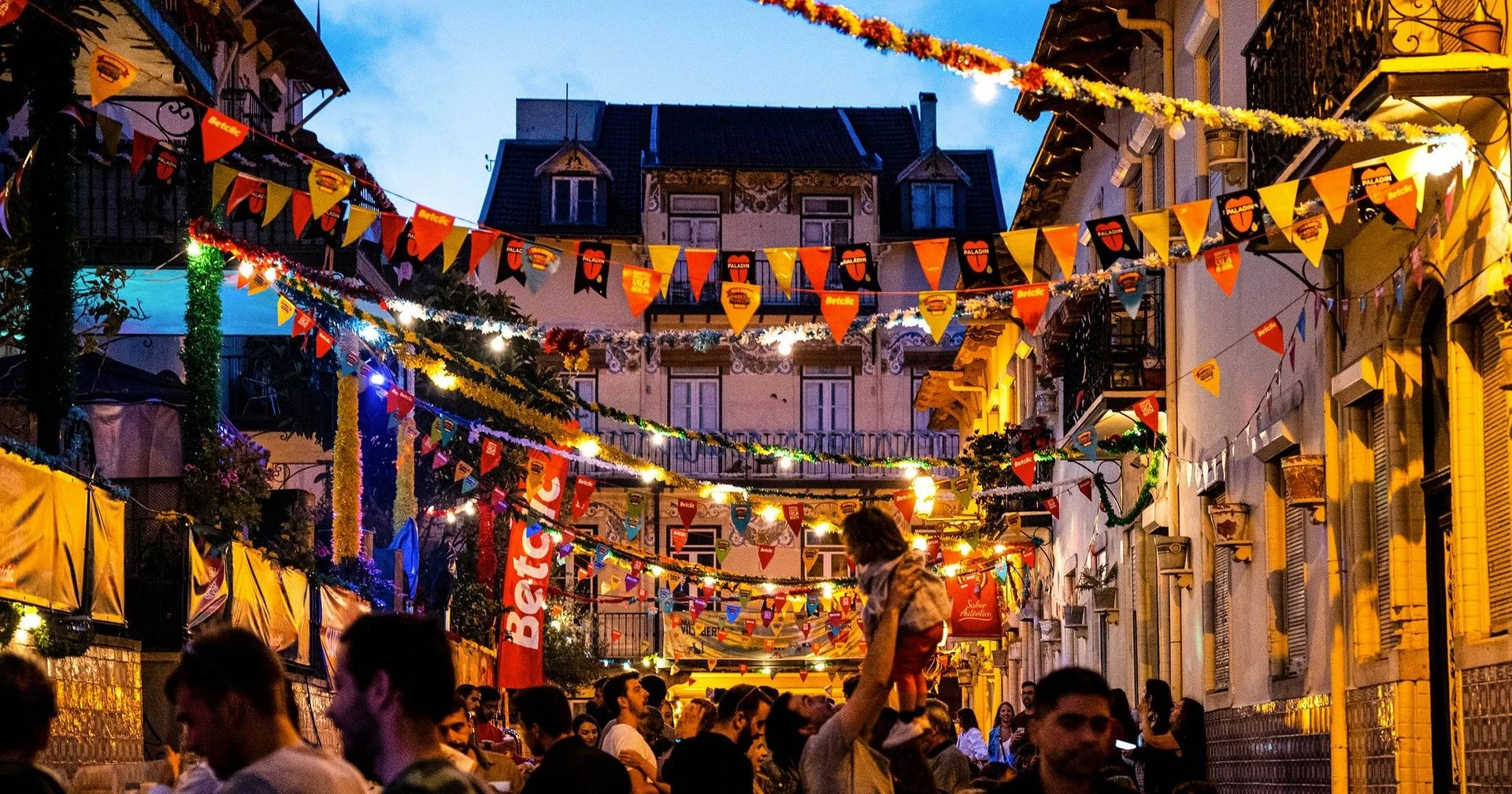
Best plan for first-timers
For a first experience, keep the plan simple. Santos Populares is not the best night for complicated logistics.
Start around 6pm or 7pm with an early dinner, sardines or a drink before the streets get too crowded. If you want to watch the Marchas Populares, head towards Avenida da Liberdade before 9pm and expect crowds.
If your priority is food and atmosphere, choose one neighbourhood instead. Alfama is the classic choice, Graça is a strong alternative, Mouraria feels lively and central, Bica is better for a younger nightlife feel, and Santos or Madragoa can be easier to navigate.
After 10pm, movement gets slower. Stay local, avoid trying to cross the whole city and do not leave your return plan until the last minute.
The best first-timer plan is simple: pick one area, arrive early, eat something, enjoy the music and leave before you are completely exhausted.
Best neighbourhoods for the Lisbon Sardine Festival
You do not need to visit every neighbourhood. In fact, you probably should not try. Lisbon’s hills, narrow streets and festival crowds make moving around slower than usual.
Choose one main area and enjoy it properly.
Alfama
Alfama is the classic choice. Its narrow streets, staircases and small squares create the most traditional setting for Santos Populares.
This is where many visitors imagine themselves eating sardines during the festival: music echoing through old streets, grills outside, decorations overhead and crowds moving slowly through the neighbourhood.
The downside is that Alfama gets extremely crowded, especially on 12 June. If you want to eat here, arrive early and avoid waiting until you are already hungry.
For more ideas in the area outside the festival context, read our guide to the best restaurants in Alfama.
Graça
Graça is one of the best alternatives to Alfama. It still has a local feel, good viewpoints and easy access to nearby areas like Mouraria and Alfama, but parts of the neighbourhood can feel slightly easier to navigate.
A good plan is to start in Graça before sunset, enjoy the view, then move into the street-party atmosphere as the evening gets busier. For daytime ideas, see our guide to what to see in Graça.
Mouraria
Mouraria is lively, central and multicultural. It works well if you want to move between different nearby areas, including Martim Moniz, Castelo, Alfama and Graça.
It is a good choice if you want a less polished, more lived-in version of the festival.
Bica
Bica is usually livelier and more nightlife-focused. The area around the funicular and nearby streets can become very busy later in the evening.
Choose Bica if you want a more energetic night rather than a calmer traditional dinner.
Madragoa
Madragoa is a good option if you want a neighbourhood feel without being in the tightest parts of Alfama. It is close to Santos, Estrela and Lapa, and it has a more local, residential character.
During Santos Populares, Madragoa can be a good middle ground: festive enough to feel part of the celebrations, but often easier to handle than the most crowded streets of Alfama.
Santos
Santos can be a practical option if you want a festive atmosphere with easier movement than in some of the narrowest old neighbourhoods. It is also useful if you are staying near Cais do Sodré, Estrela, Lapa or Madragoa.
For more context on the area, read our guide to what to see in Santos.
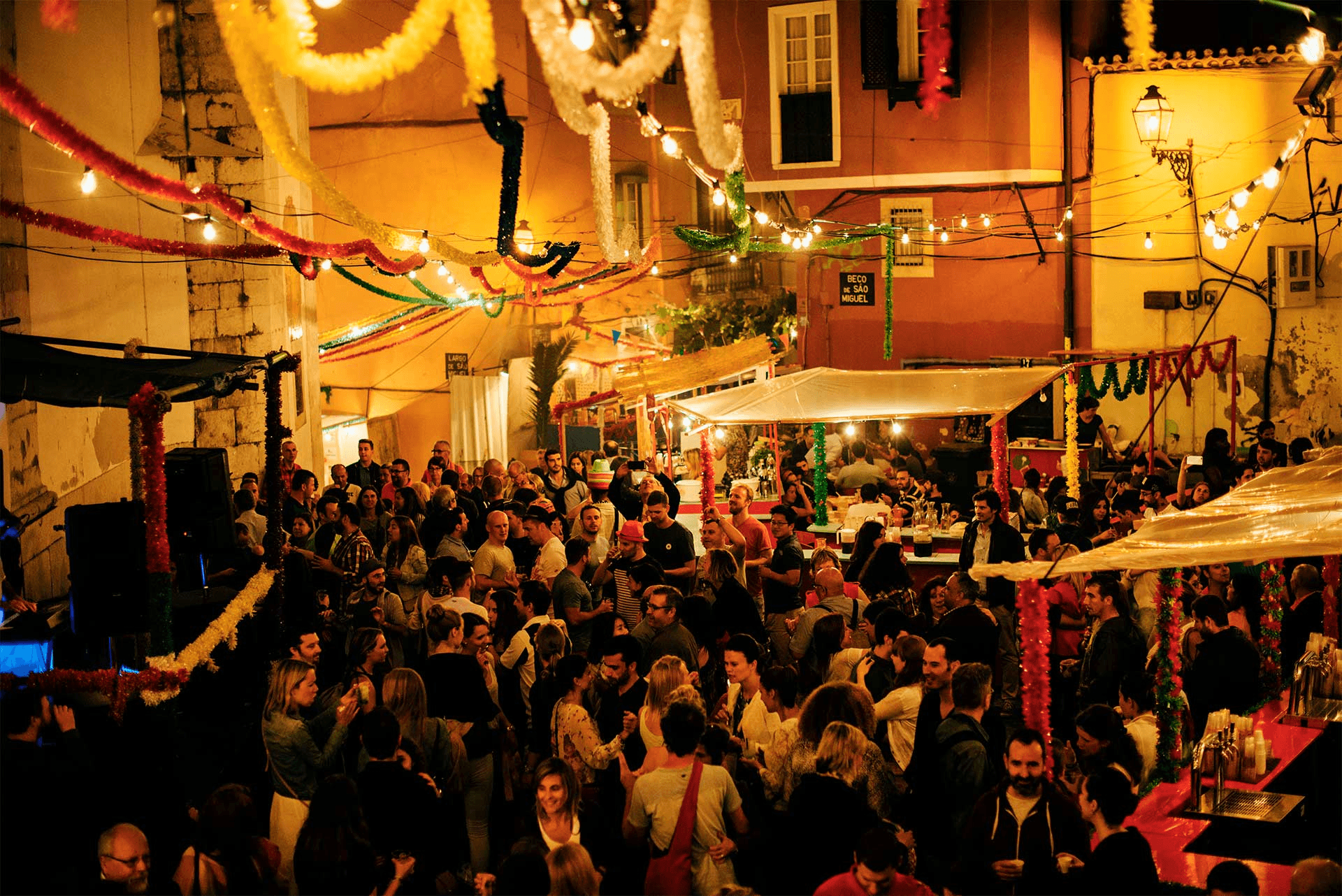
Specific arraiais to look for
Exact programmes change every year, so you should check details closer to June. Still, several areas are traditionally associated with popular arraiais during Santos Populares.
Useful places to look around include:
Largo de São Miguel in Alfama
Largo do Salvador in Alfama
Largo da Graça in Graça
Vila Berta in Graça
Largo da Severa and Rua da Guia in Mouraria
Bica and the streets around the funicular
Santos and Madragoa
Praça da Alegria near Avenida da Liberdade
These are traditional areas and recurring party spots, but exact 2026 dates and programmes can change. Check closer to June before planning your night around one specific arraial.
You do not always need a precise address. During Santos Populares, the easiest method is often to follow the music, decorations and smell of grilled sardines.
How do you eat sardines in Lisbon?
During Santos Populares, sardines are usually served simply. The most traditional version is a grilled sardine placed on a slice of bread, sometimes with roasted peppers, boiled potatoes or salad on the side.
Do not expect a tidy meal. Sardines can be oily, smoky and a little messy, especially if you are eating them in the street. That is part of the experience.
If you are not used to eating whole fish, take your time. Follow what locals are doing, keep napkins nearby and do not wear your most delicate white shirt.
The slice of bread is not just decoration. It catches the juices from the sardine and becomes part of the meal.
What else can you eat besides sardines?
Sardines get most of the attention, but they are not the only food at the festival.
You will usually find bifanas, simple pork sandwiches that are easy to eat while walking around. They are a good option if you do not like fish or want something more practical.
You may also find grilled pork, chouriço, roasted peppers, bread, caldo verde, beer and wine. Depending on the area, you may also see farturas, churros, salgados, pão com chouriço and, in some places, caracóis.
For a more detailed food guide, read our article on what to eat at Santos Populares in Lisbon.
Vegetarian options at traditional street stalls can be limited, so it is better to plan ahead if you do not eat fish or meat.
What is pimba music?
If you spend a night at Santos Populares, you will probably hear pimba music.
Pimba is a popular Portuguese music style often associated with simple choruses, humour, innuendo and big singalong energy. You do not need to understand every lyric to enjoy the atmosphere. The point is that people know the songs, sing loudly and dance without taking themselves too seriously.
For tourists, pimba can feel confusing at first. Then, after a while, it starts to make sense: it is part of the informal, slightly ridiculous, very social mood of the night.
What is manjerico?
Manjerico is a small basil plant traditionally associated with Santos Populares. You will see it at stalls and in decorations, often with a paper carnation and a small popular verse.
It is especially connected to Santo António and ideas of love and courtship. A common tradition is to offer manjerico to someone you like.
One small tip: people traditionally do not smell the plant directly with your nose. Instead, they gently pass their hand over it and then smell their hand.
Other traditions besides sardines
The Lisbon Sardine Festival name is useful, but it does not tell the full story.
Santos Populares also includes the Marchas Populares, the neighbourhood parade on Avenida da Liberdade, and the Casamentos de Santo António, a traditional group wedding ceremony linked to Saint Anthony’s reputation as a matchmaking saint.
For 2026, Lisbon City Council has announced 16 couples for the Santo António Weddings on 12 June, between Lisbon Cathedral and the Salão Nobre of the Paços do Concelho.
You do not need to plan your whole day around the weddings, but knowing about them helps you understand why Santo António is more than just a party night.
How much do sardines cost during Santos Populares?
Prices vary depending on the neighbourhood, stall, portion size and night. The busiest and most tourist-heavy areas may be more expensive, especially around the main celebration zones.
Because prices change from year to year and stall to stall, it is better not to rely on a fixed number. Bring cash, check the price before ordering and avoid waiting until the busiest hour if you want more choice.
A bifana or simple sandwich is often one of the easiest and more affordable options if you want something quick.
Do you need tickets?
No, not for the general Santos Populares street parties. Most neighbourhood arraiais are free to enter, and you pay only for food and drinks.
The Marchas Populares parade on Avenida da Liberdade is also free to watch. However, it gets very crowded, so you should arrive earlier than 9pm if you want a better view.
Some private parties, restaurants or special events may have their own booking rules, but the main street-party atmosphere is open and informal.
Practical tips before you go
Bring cash. Cards are common in Lisbon, but small street stalls can be quicker and easier with cash during busy festival nights.
Wear comfortable shoes. Lisbon’s hills, cobblestones and crowds are not kind to uncomfortable footwear.
Start early. If you wait until late evening to eat, queues may be long and the best areas may already be packed.
Pick one main neighbourhood. Trying to visit Alfama, Graça, Mouraria, Bica, Madragoa and Santos on the same night is tiring and usually unnecessary.
Keep your valuables secure. Santos Populares is generally friendly, but crowded streets always require extra care.
Do not rely too much on taxis or ride-hailing apps late at night. Walking and public transport are often more practical, especially near the busiest areas. For planning, read our guide to public transport in Lisbon.
Is the Lisbon Sardine Festival worth it?
Yes, if you enjoy informal street celebrations, local food and busy neighbourhoods. It is one of the most memorable times of the year to be in Lisbon.
But it is not for everyone. If you dislike crowds, smoke, queues or loud music, the night of 12 June may feel intense. In that case, go earlier in the evening or experience the atmosphere on another June night instead.
The best version for most visitors is simple: choose one area, arrive early, eat something, walk around, enjoy the music and leave before you are completely exhausted.
Where should you stay?
If you want to be close to the celebrations, Baixa, Chiado, Alfama, Graça, Avenida da Liberdade and Cais do Sodré are practical choices. They put you near the action, but they can also mean more noise and crowds.
If you want a calmer base, consider Príncipe Real, Estrela, Campo de Ourique, Avenidas Novas or Saldanha. These areas are still connected to the centre but may feel easier at night.
For a full breakdown, read our guide to where to stay in Lisbon during Santos Populares.
FAQ
1. Is there a Lisbon Sardine Festival?
There is no single official event usually called the Lisbon Sardine Festival. Most visitors use this name to refer to Santos Populares, Lisbon’s June celebrations where grilled sardines are one of the main symbols.
2. When is the Lisbon Sardine Festival in 2026?
The main night is 12 June 2026, leading into Saint Anthony’s Day on 13 June. This is when Lisbon has its biggest street parties and the Marchas Populares parade on Avenida da Liberdade.
3. Where is the best place to eat sardines in Lisbon during the festival?
Alfama is the classic choice, but Graça, Mouraria, Bica, Madragoa and Santos are also good areas during Santos Populares. Go early if you want to avoid the biggest queues and crowds.
4. Is the Lisbon Sardine Festival free?
Yes, the main street-party atmosphere is free to join. You pay for food and drinks. The Marchas Populares parade on Avenida da Liberdade is also free to watch.
5. What should tourists know before going?
Bring cash, wear comfortable shoes, arrive early, keep valuables secure and choose one main neighbourhood instead of trying to cover the whole city in one night.

Rafael Rocha
The Author
Having lived and studied in Lisbon for many years, a deep connection to the city grew naturally over time. Here I share practical guides and local recommendations to help you experience Lisbon better.
Buy me a coffee