Portuguese Breakfast in Lisbon: What to Eat & Where
Discover what a traditional Portuguese breakfast includes and the best cafés in Lisbon to try local pastries, coffee, toast and savoury options.

Breakfast in Lisbon is usually much simpler than the brunch menus you see in the city centre. A traditional Portuguese breakfast is often just coffee with bread, toast or a pastry, eaten quickly at a neighbourhood pastelaria before work.
That simplicity is exactly what makes it worth trying. Instead of looking for a large “Portuguese breakfast” plate, the more local experience is to order two or three small things at the counter and eat as Lisbon residents do.
What is a traditional Portuguese breakfast?
The most common combinations are:
Bica and pastel de nata — a short espresso with Lisbon’s best-known custard tart.
Galão and torrada — milky coffee served in a tall glass with thick buttered toast.
Meia de leite and pão com manteiga — coffee with milk and a bread roll with butter.
Coffee with a croissant or pastry — common for a quick breakfast on the way to work.
Bread with cheese or ham — a simple savoury option if you do not want something sweet.
Do not expect eggs, bacon, pancakes and fruit to appear automatically. Those belong more to Lisbon’s modern brunch scene than to the everyday Portuguese breakfast.
If you are visiting Lisbon for the first time, our first-time Lisbon guide explains a few other small local habits that are useful to know before you arrive.
Coffee to order in Lisbon
Coffee terminology is one of the most useful things to learn.
A bica is Lisbon shorthand for an espresso. A meia de leite is roughly equal parts coffee and milk, normally served in a cup. A galão contains more milk and usually arrives in a tall glass.
If you want something closer to a long black coffee, ask for an abatanado. Cappuccino is widely available too, particularly in specialty coffee shops, but it is not the traditional default.
Pastries worth trying at breakfast
The obvious choice is a pastel de nata, and there is nothing wrong with starting there. The Lisbon tourism board also presents it as the city’s signature pastry.
But breakfast counters offer much more: croissants, pão de Deus topped with coconut, queijadas, cakes and regional pastries that change from bakery to bakery.
In Belém, Pastéis de Belém remains the historic reference. If you are heading there, combine breakfast with our guide to what to see in Belém.
Best places for a Portuguese breakfast in Lisbon
Pastéis de Belém
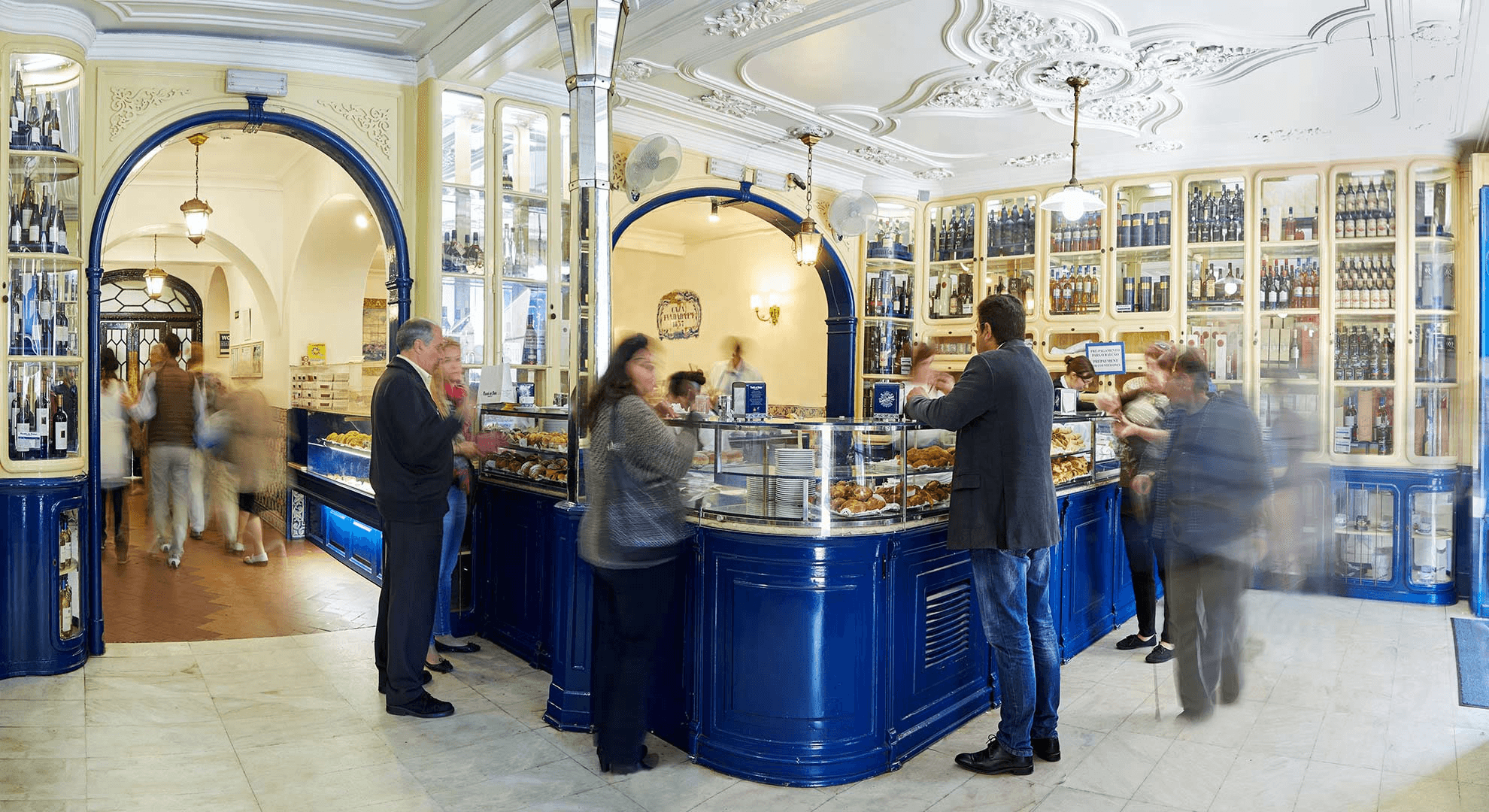
This is the classic stop if you want the original Belém-style custard tart. Go early if you can. The queues outside can look intimidating, although sitting inside is often easier than waiting for takeaway.
Manteigaria
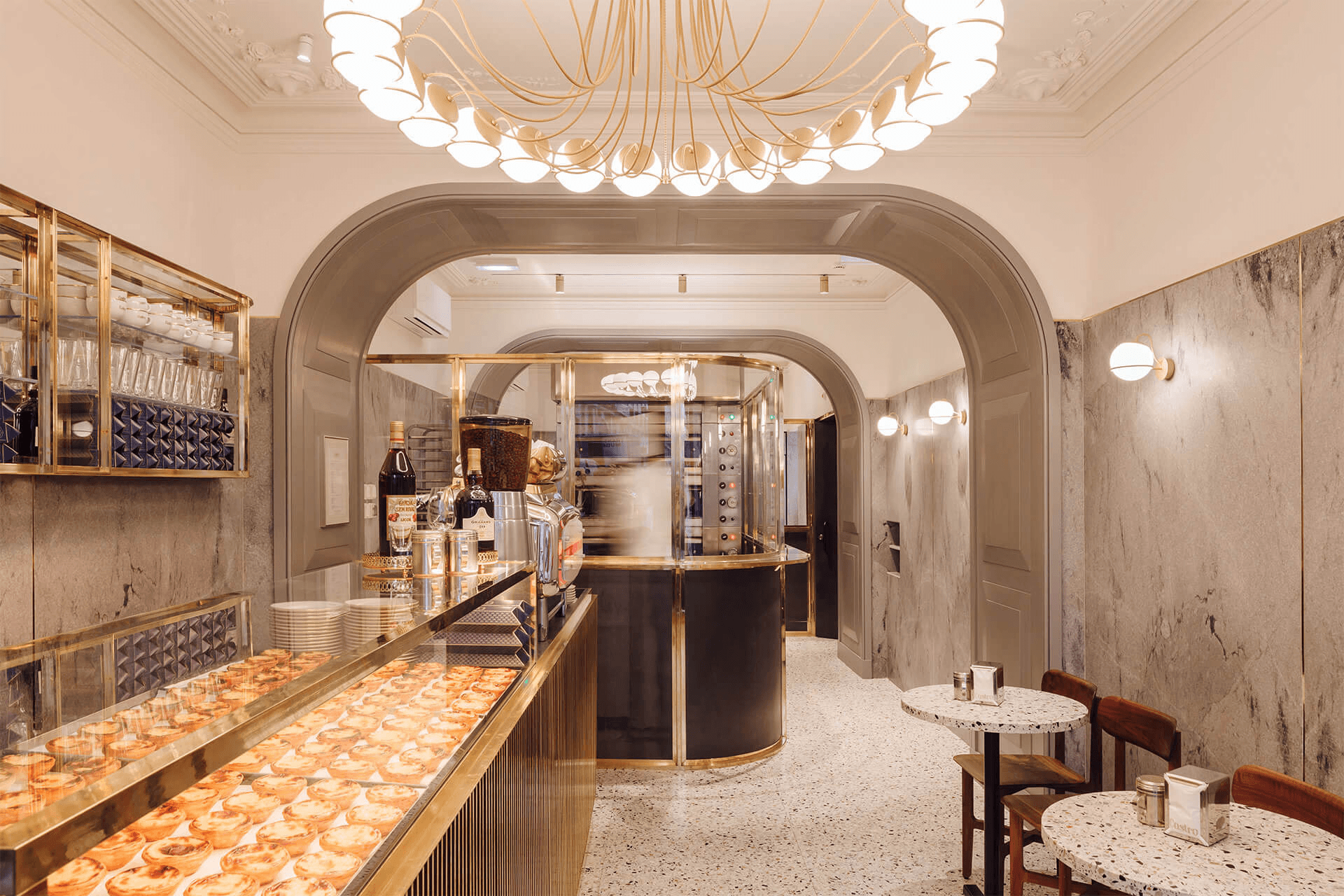
Manteigaria is one of the easiest places to try a very good pastel de nata without travelling to Belém. The Chiado branch is especially convenient if you are sightseeing centrally.

Pão de Canela
On Praça das Flores, Pão de Canela works well if you want something between a traditional café breakfast and a longer sit-down morning. Its menu includes espresso, galão, meia de leite, pão, toast and pastries alongside fuller brunch dishes.
A neighbourhood pastelaria
For the most everyday version, ignore ratings for a moment and walk into a busy local pastelaria near your accommodation. Order at the counter and choose whatever has just come out of the bakery.
That is usually more representative of a normal Portuguese breakfast than a 15€ brunch board.
How much does breakfast cost in Lisbon?
A basic café breakfast remains one of the cheaper meals of the day. Prices vary sharply between residential neighbourhoods, central tourist areas and specialty coffee shops.
As a rough rule, a coffee and pastry can still be inexpensive in a local café, while breakfast in Chiado, Príncipe Real or a modern brunch restaurant can easily cost several times more.
Check the displayed menu before ordering if price matters to you.
Is breakfast included at hotels worth it?
If your hotel charges a substantial extra fee, it is often worth skipping it for at least one morning and eating locally instead. Lisbon has cafés on almost every central street, and breakfast is one of the easiest meals to improvise.
Hotel breakfast does make sense if you have children, an early departure or want a larger meal before a day trip.
If breakfast includes something sweet, our pastel de nata guide explains where to try Lisbon’s best-known custard tart.
FAQ - Portuguese breakfast in Lisbon
What do Portuguese people usually eat for breakfast?
Usually something simple: coffee with bread, toast, a croissant or another pastry.
Is pastel de nata eaten for breakfast?
Yes. It can be eaten at any time of day, but coffee and a pastel de nata is a perfectly normal breakfast or mid-morning snack.
What is a bica?
In Lisbon, a bica is an espresso.
What is the difference between galão and meia de leite?
Both combine coffee and milk, but galão normally contains more milk and is typically served in a tall glass.

Rafael Rocha
The Author
Having lived and studied in Lisbon for many years, a deep connection to the city grew naturally over time. Here I share practical guides and local recommendations to help you experience Lisbon better.
Buy me a coffee