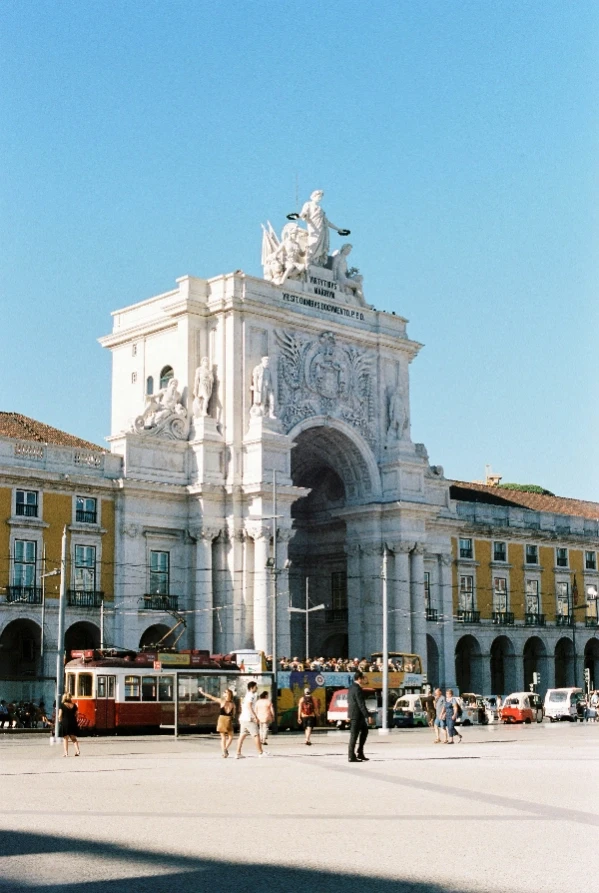
Lisbon trams: which one should you ride?
Lisbon’s trams, funiculars and lift are not all worth riding in the same way. Here is what each one does, where it goes, and which rides are actually worth your time.
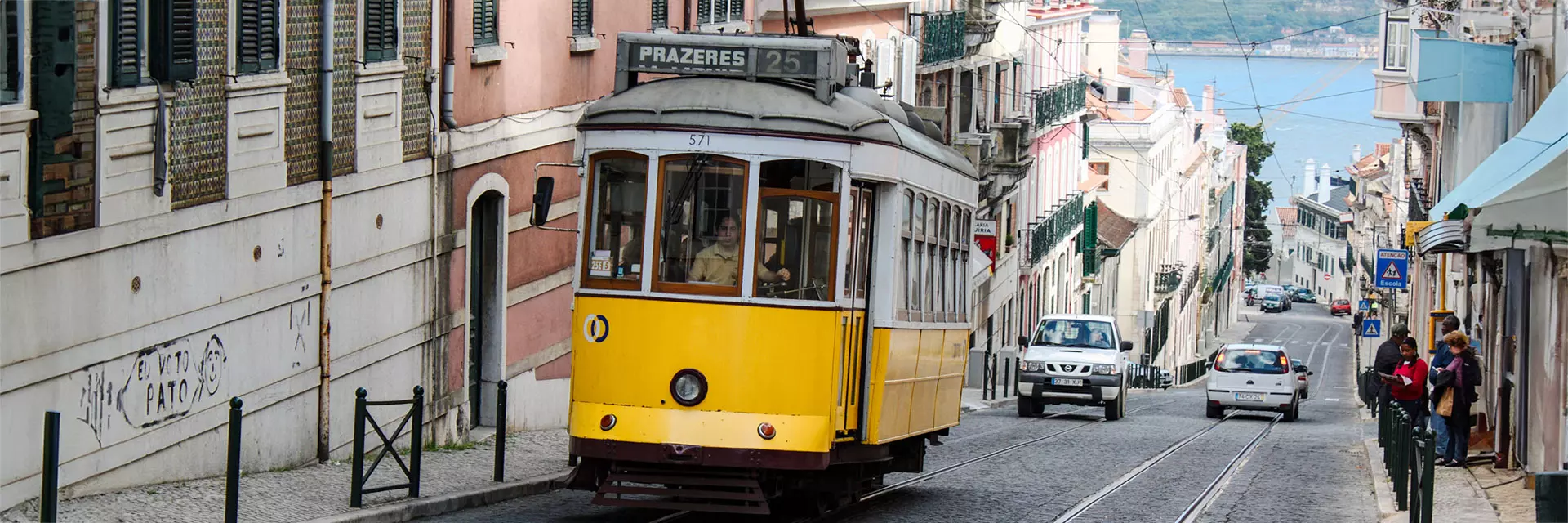
Lisbon’s trams are one of the city’s most recognisable forms of transport, but they are not all the same experience. Some are practical, some are scenic, some are heavily touristy, and some are much better if you want the charm without the worst of the queues. Carris currently operates six tram routes in Lisbon, alongside the city’s three historic funiculars and the Santa Justa lift.
Below, we explain Lisbon’s trams, funiculars and lift, including where each one goes, which ones are actually worth riding, how tickets work, and which route makes the most sense depending on what you want to see. If you are also trying to understand the wider transport system, start with our guide to how to use public transport in Lisbon.
How Lisbon’s trams work
Lisbon’s tram network includes the well-known historic yellow trams, but not every route uses the same type of vehicle or serves the same purpose. Some lines are more scenic and atmospheric, while others are more practical for getting to specific areas such as Belém or Príncipe Real. Carris lists six tram routes on its current network: 12E, 15E, 18E, 24E, 25E and 28E.
For most visitors, the main question is not whether to ride a tram, but which one is actually worth the time. If your goal is the classic old Lisbon experience, some lines stand out much more than others. If you simply want a useful ride to a specific part of the city, the best choice may be different.
Tickets and fares
Lisbon’s trams are part of the Carris public transport system, so they use the same occasional ticket structure as other city transport. Carris lists the 2026 prices as 1,90€ for a Carris/Metro travel ticket, 3,30€ for an on-board tram ticket, 4,30€ for the funiculars for up to two journeys, and 6,20€ for the Santa Justa lift for up to two journeys. Buying on board is therefore the least economical option for regular tram use.
If you expect to use public transport more than once or twice in a day, it usually makes more sense to use the standard Carris/Metro ticketing options rather than paying separately every time you step onto a tram. Carris also provides official guidance for occasional journeys, including where and how these tickets can be bought and loaded.
Which Lisbon tram should you ride first?
If you only have time for one classic Lisbon tram ride, 28E is the obvious answer for the postcard version of the experience. It is the city’s most famous line and the one most people picture when they think about Lisbon trams. That popularity, however, comes with long queues, crowded carriages and a less relaxed experience than many first-time visitors expect. Carris still lists 28E as one of the core tram routes, although temporary service changes can occur.
If you want something more manageable, 12E is often the smarter choice. It gives you a similar old-city feel in a shorter format and is usually the better option if you want some of the atmosphere of 28E without fully committing to the chaos. For many travellers, it is the better first ride even if it is not the most famous one.
Tram 28: the classic Lisbon ride
Tram 28 remains Lisbon’s best-known route for a reason. It passes through some of the city’s most historic and visually rewarding areas, which is exactly why it has become so iconic. If you want the “I am in Lisbon now” tram experience, this is the line people usually mean. Carris officially lists the route as running between Martim Moniz and Campo Ourique (Prazeres).
That said, tram 28 is not automatically the best ride for everyone. It is often the busiest, least comfortable and least flexible option, especially in peak visiting hours. If you are staying nearby and want to try it early in the morning, it can still be worth it. If not, there are better alternatives that feel more relaxed and no less characterful. For a broader look at the areas this route passes near, see our guide to the best neighbourhoods in Lisbon.
Tram 12: the better alternative for many visitors
Tram 12 is one of the most useful alternatives to 28E because it still gives you that historic centre tram atmosphere without quite the same level of hype. Carris lists it as running between Martim Moniz and Praça Luís de Camões, which makes it especially relevant if you are spending time between the Baixa, Alfama-side slopes and Chiado area.
If your priority is simply to ride one old Lisbon tram and enjoy the city without the full “everyone had the same idea” experience, 12E is often the better recommendation. It fits particularly well into a day spent exploring central areas on foot, especially if you are also planning to spend time in Chiado.
Tram 15: the one to take for Belém
If your goal is Belém, tram 15 is the route that matters most. Carris lists 15E as running between Praça da Figueira and Algés, making it the key tram route for travellers heading west from the centre towards Belém.
This is also the tram that feels least like a nostalgic novelty ride and most like practical transport. It is usually the route to choose when the destination matters more than the romance of old wooden interiors and squeaky climbs. If your day includes Jerónimos Monastery, the Belém Tower or Pastéis de Belém, this is the tram to know. You can pair it with our guide to what to see in Belém.

Tram 24: a good route for Príncipe Real
Tram 24 is one of the most interesting routes if you want a Lisbon tram ride that feels central, attractive and a little less obvious than 28E. Carris lists 24E as running from Largo do Camões to Campolide, which makes it especially useful for travellers spending time around Chiado and Príncipe Real.
It is a strong choice if you want a scenic ride that still feels connected to places many visitors already want to explore. It also works well if you like the idea of combining tram travel with neighbourhood wandering rather than treating the ride as an attraction in itself.
Tram 25 and tram 18: worth it or not?
Tram 25 and tram 18 are usually not the first routes visitors think about, but they can still be worth knowing. Carris lists 25E between Praça da Figueira and Campo de Ourique (Prazeres), and 18E between Cais do Sodré and Cemitério da Ajuda.
These are better seen as secondary options rather than must-do rides. They are useful if they fit naturally into your day or if you want to experience a more local-feeling tram route without chasing the most famous line. They are not usually the ones to prioritise on a short Lisbon trip, but they can appeal to travellers who enjoy transport for its own sake or want a quieter experience.
Are Lisbon’s funiculars worth riding?
Yes, but not all for the same reason. Lisbon’s three historic funiculars — Bica, Glória and Lavra — are part of the same broader heritage transport system that includes the Santa Justa lift, and Carris notes that these funiculars and the lift are classified as National Monuments.
As experiences, the funiculars are shorter and more about the steep climb and setting than about transport efficiency. They make the most sense when you are already nearby and want a memorable ride that saves you a hill at the same time. They are not essential to “tick off” all at once, and in practice most visitors will enjoy one more than all three.
Which funicular is best?
Bica is the most photogenic and the one most travellers recognise from photos. Glória is the most famous in practical terms and connects an area many visitors already pass through. Lavra is usually the quietest and least touristy of the three. Carris groups Bica, Glória and Lavra together in its pricing and network structure, which underlines that they are separate heritage rides within the same urban transport system.
If you only want to ride one, Bica is usually the most rewarding visually. If you prefer something that feels a bit less performative and a bit more tucked away, Lavra is often the better pick. Glória sits somewhere in the middle: central, classic and easy to include in a first trip.
Santa Justa lift: worth it or skip it?
The Santa Justa lift is the most famous vertical transport experience in Lisbon, but it is also the easiest one to over-romanticise. Carris treats it separately from the other funicular rides in both the network and fare structure, with a higher on-board price than standard tram or funicular journeys.
It can be worth it if the lift itself is part of the experience you want. If your main goal is just to enjoy the view, it is often less compelling than many first-time visitors imagine. Lisbon already has several excellent viewpoints, and the city does not exactly suffer from a shortage of hills. For that side of the city, see our guide to the best viewpoints in Lisbon.
The best Lisbon tram rides by type
If you want the classic old Lisbon ride, choose 28E. If you want a similar feel with a better chance of actually enjoying it, choose 12E. If you want a practical tram to somewhere you were already going, 15E is the best option for Belém. If you want a good scenic ride in a more central lifestyle-heavy part of the city, 24E is one of the most interesting choices.
For funiculars, Bica is the prettiest, Lavra is the quietest, and Glória is the easiest to include in a central sightseeing day. Santa Justa is the most famous, but not automatically the most rewarding. The right choice depends less on what is “most iconic” and more on what fits your day naturally.

Practical tips before you ride
Service changes do happen on Lisbon’s tram network, especially on the most famous lines, so it is worth checking Carris before relying on a specific route. Carris provides live route information, schedules and service updates through its official website.
If you are riding mainly for the experience, go early and keep expectations realistic. If you are using trams as real transport, choose the route that genuinely helps your day rather than the one that shows up most on postcards. Lisbon’s best tram ride is not always the most famous one.
Final thoughts
Lisbon’s tram network is not something you need to “complete” to enjoy. One or two good choices are usually enough. For most first-time visitors, the best combination is one classic ride, one practical ride, and maybe one funicular if it naturally fits the route.
If you want the short version: ride 28E if you care most about the icon, 12E if you want a better version of that experience, 15E if you are going to Belém, and Bica if you only want one funicular. Everything else depends on how much you like hills, queues and transport nostalgia.
FAQ
1. Which Lisbon tram is best for tourists?
For the classic experience, tram 28 is the best-known choice. For a similar but often more manageable ride, tram 12 is usually the better recommendation.
2. Which tram should I take to Belém?
Tram 15 is the main route for Belém. Carris lists 15E between Praça da Figueira and Algés, making it the key tram for that part of the city.
3. Are Lisbon trams still used by locals?
Yes. Lisbon’s trams are part of the active Carris transport network, not just heritage attractions, even though some lines are much more tourist-heavy than others.
4. How much does it cost to ride a tram in Lisbon?
Carris lists the 2026 on-board tram fare at 3,30€, while the standard Carris/Metro travel ticket is 1,90€.
5. Is Santa Justa worth it?
It can be, but mostly if the lift itself is part of the experience you want. If you only care about the view, many travellers may prefer one of Lisbon’s viewpoints instead.

Rafael Rocha
The Author
Having lived and studied in Lisbon for many years, a deep connection to the city grew naturally over time. Here I share practical guides and local recommendations to help you experience Lisbon better.
Buy me a coffee