Top Tourist Things to Do in Lisbon: First-Time Guide (2026)
A first-time tourist guide to Lisbon, covering essential areas, transport, food, fado, viewpoints and how to build a practical itinerary.

Lisbon is one of those cities where the main tourist sights are popular for a reason. The viewpoints really are worth the climb, the old neighbourhoods do feel different from one another, and the river gives the city a sense of space that many European capitals do not have.
In this article, you’ll find a practical guide to the top tourist things to do in Lisbon, especially if it is your first visit. It covers the essential landmarks, neighbourhoods, viewpoints, food experiences, cultural activities and day trips that help you understand the city without turning your itinerary into a race.
For the definitive shortlist, start with our guide to the best things to do in Lisbon. This page focuses on practical planning for first-time tourists.
Start in Belém for Lisbon’s maritime history
Belém is one of the best places to begin if you want to understand Lisbon’s role in Portuguese history. This riverside district is closely linked to the Age of Discoveries, when Portuguese navigators sailed from the Tagus towards Africa, Asia and Brazil.
The two major sights are Jerónimos Monastery and Belém Tower, both UNESCO-listed landmarks. Jerónimos Monastery is the stronger interior visit, with its Manueline architecture, detailed stonework and connection to Vasco da Gama. Belém Tower is more compact, but it remains one of Lisbon’s most recognisable monuments.
Nearby, the Monument to the Discoveries adds more context to Portugal’s maritime past, while the riverside walk gives you space to slow down between sights.
Belém is also where you’ll find the famous Pastéis de Belém. It is touristy, yes, but still worth doing if you want the classic Lisbon custard tart experience. Go early if you want to avoid the longest queues.
For a more detailed route through the area, read our guide to what to see in Belém.

Explore Alfama and the old Lisbon streets
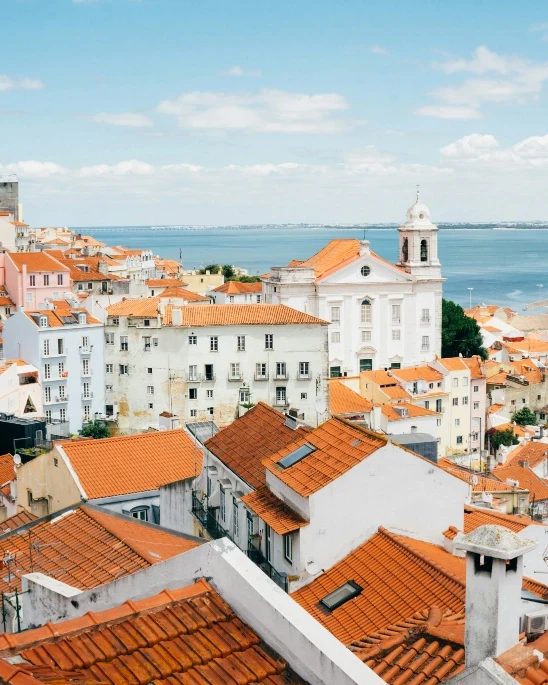
Alfama is one of the most important tourist areas in Lisbon, but it works best when you do not rush it. This is not a neighbourhood for a strict checklist. It is better for slow walking, small squares, staircases, tiled façades and unexpected views over the Tagus.
Start near the river and climb gradually towards the castle area. Along the way, you will pass narrow streets, local cafés, souvenir shops, fado restaurants and viewpoints. Some corners feel very polished for visitors, while others still feel residential and lived-in.
São Jorge Castle sits above the neighbourhood and offers one of the best views in the city. The castle itself is not the only reason to go; the setting, walls and perspective over Lisbon are the real appeal.
Alfama is also one of the best places to hear fado, although you should choose carefully. Look for smaller venues where the music is taken seriously, rather than restaurants that treat fado as background entertainment.
See Lisbon from its viewpoints
Lisbon’s viewpoints are among the top tourist things to do because they help you understand the city quickly. From above, the hills, river, bridge, castle, rooftops and neighbourhoods all start to make sense.
For a classic view over Alfama, go to Miradouro de Santa Luzia or Portas do Sol. They are popular and often busy, but they are easy to include while exploring the old town.
For a wider view, Miradouro da Senhora do Monte is one of the strongest options. It takes more effort to reach, but the panorama is excellent. Miradouro da Graça is another good choice, especially if you want to combine the view with time in the neighbourhood.
On the western side of the centre, São Pedro de Alcântara gives a different perspective over Baixa, the castle and the eastern hills. It is especially useful if you are moving between Bairro Alto, Chiado and Avenida da Liberdade.
For a fuller comparison, read our guide to the best viewpoints in Lisbon.

Ride a tram or funicular
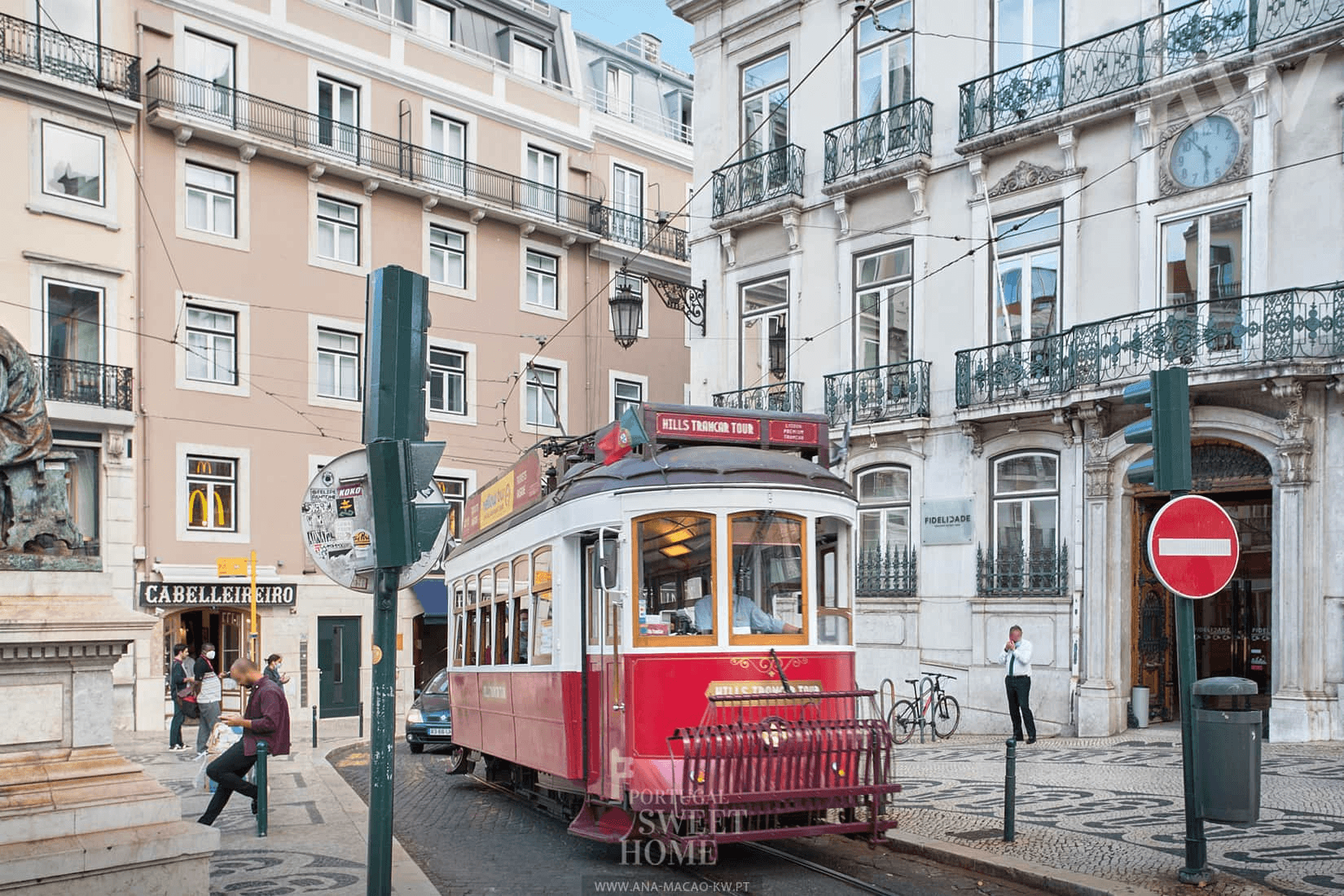
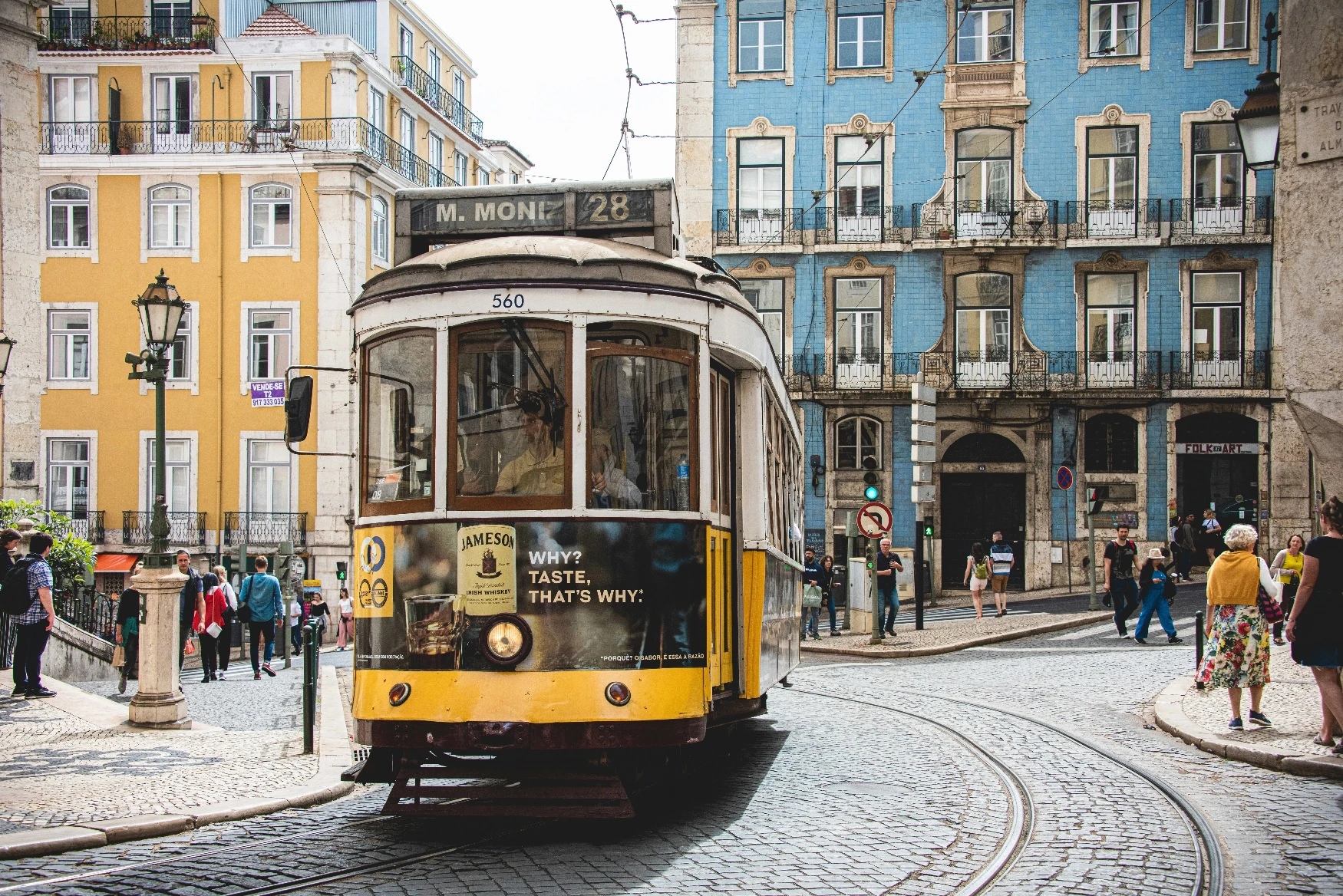
Lisbon’s yellow trams are one of the city’s most recognisable images. Tram 28 is the famous route, passing through areas such as Graça, Alfama, Baixa and Estrela. It is scenic, historic and photogenic, but it is also crowded.
If you want to ride Tram 28, go early in the day and avoid treating it like a relaxed sightseeing tour during peak hours. It is still public transport, and locals use it too.
The funiculars are often easier to fit into a tourist itinerary. Elevador da Bica is the most photographed, while Elevador da Glória connects Restauradores with the Bairro Alto area. Elevador do Lavra is quieter and less famous.
Santa Justa Lift is another classic, but queues can be long. If you mainly want the view, there are often easier ways to reach the upper level around Carmo and Chiado.
For first-time visitors, one tram or funicular ride is enough. You do not need to do them all unless you specifically enjoy historic transport.
Walk through Baixa, Chiado and Praça do Comércio
Baixa and Chiado are practical areas to include early in your trip because they connect many of Lisbon’s main sights. Baixa is the flatter, grid-like downtown rebuilt after the 1755 earthquake. Chiado is more elegant, with theatres, shops, cafés and literary history.
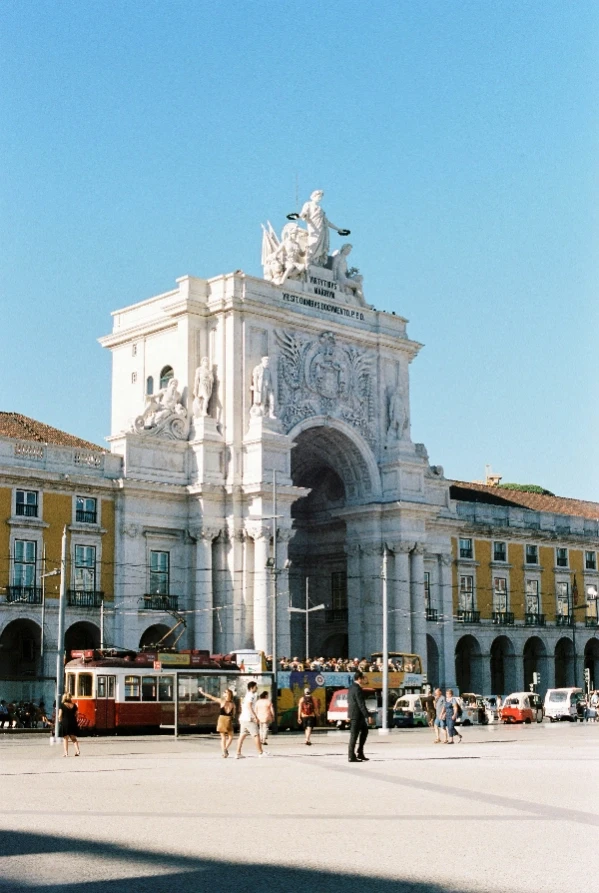
Praça do Comércio is the most important square in this part of the city. It opens directly onto the river and gives you one of the clearest examples of Lisbon’s post-earthquake urban design. From here, you can walk up Rua Augusta, pass under the arch, and continue towards Rossio and Restauradores.
Chiado works well for a slower break. Stop for coffee, browse a bookshop, visit the Carmo area or continue towards Bairro Alto. This part of Lisbon is touristy, but it is also genuinely useful for orientation.
If you only have a short stay, Baixa and Chiado are some of the easiest areas to use as a base for sightseeing.
Try Lisbon’s essential food experiences
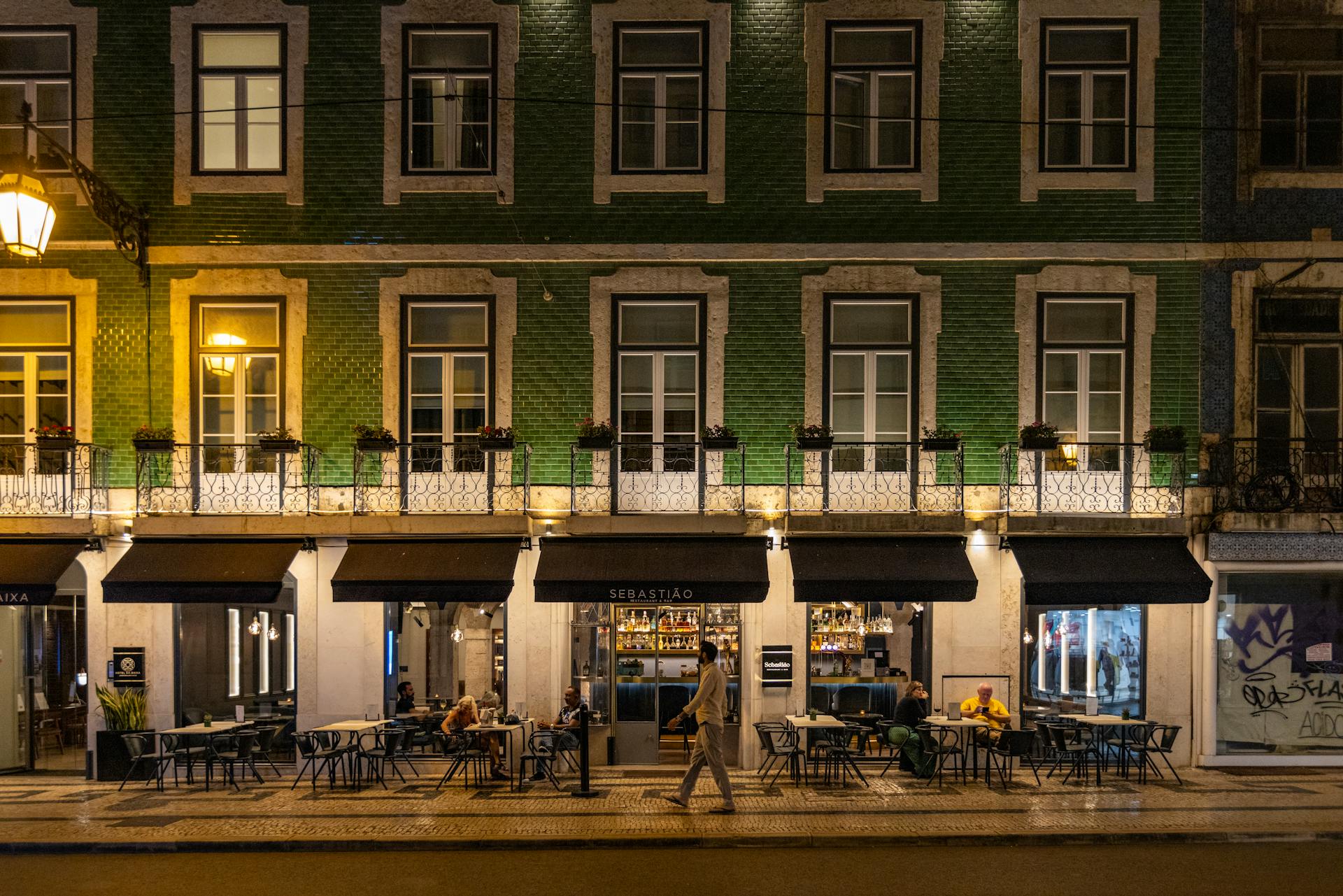
Food is one of the easiest ways to enjoy Lisbon without overplanning. Start with a pastel de nata, but do not stop there.
Try grilled fish, bacalhau, bifanas, seafood rice, pica-pau, caldo verde and simple tasca-style meals. Lisbon has plenty of polished restaurants, but some of the most satisfying meals are informal and straightforward.
Time Out Market is useful if you want variety in one place, especially with a group. It is not the most local experience in the city, but it is convenient and can be fun if you go at the right time.
For a more traditional meal, look for tascas and neighbourhood restaurants. Alfama, Mouraria, Graça, Campo de Ourique and parts of Alcântara can all work well, depending on your route.
You should also try ginjinha at least once. It is a sweet cherry liqueur usually served in a small glass, often around Rossio or Largo de São Domingos.
For a more focused food plan, use our guide to where to eat in Lisbon.
Listen to fado in Alfama or Mouraria
Fado is one of Lisbon’s most important cultural experiences. It is emotional, intimate and strongly linked to neighbourhoods such as Alfama and Mouraria.
For tourists, the key is choosing the right setting. A smaller fado house usually feels more authentic than a large dinner show built mainly for visitors. The best nights are quiet during the songs, with the room paying attention to the singer and musicians.
You do not need to understand Portuguese to appreciate fado, but it helps to know the mood. The songs often deal with longing, memory, love, loss and the sea. It is not party music, and it is not meant to be background noise.
If you are unsure where to go, choose a place where the music is central and the meal is secondary. Booking ahead is wise, especially during busier months.

Visit the Oceanário and Parque das Nações
The Oceanário de Lisboa is one of the best tourist attractions in Lisbon, especially for families, rainy days or anyone who wants a break from steep streets and historic neighbourhoods.
It is located in Parque das Nações, the modern riverside district developed for Expo 98. The area feels very different from Alfama, Baixa or Chiado: wider, flatter, more contemporary and easier to navigate.
The Oceanário is the main attraction, but the surrounding area also has a cable car, riverfront walks, gardens, restaurants and the Vasco da Gama shopping centre. It is a good half-day plan and works particularly well if you are travelling with children.
Even if modern architecture is not your main interest, Parque das Nações adds useful contrast to a Lisbon itinerary. It shows that the city is not only old streets, tiles and viewpoints.
For planning, read our guide to the Oceanário de Lisboa.
Take a river cruise or ferry across the Tagus
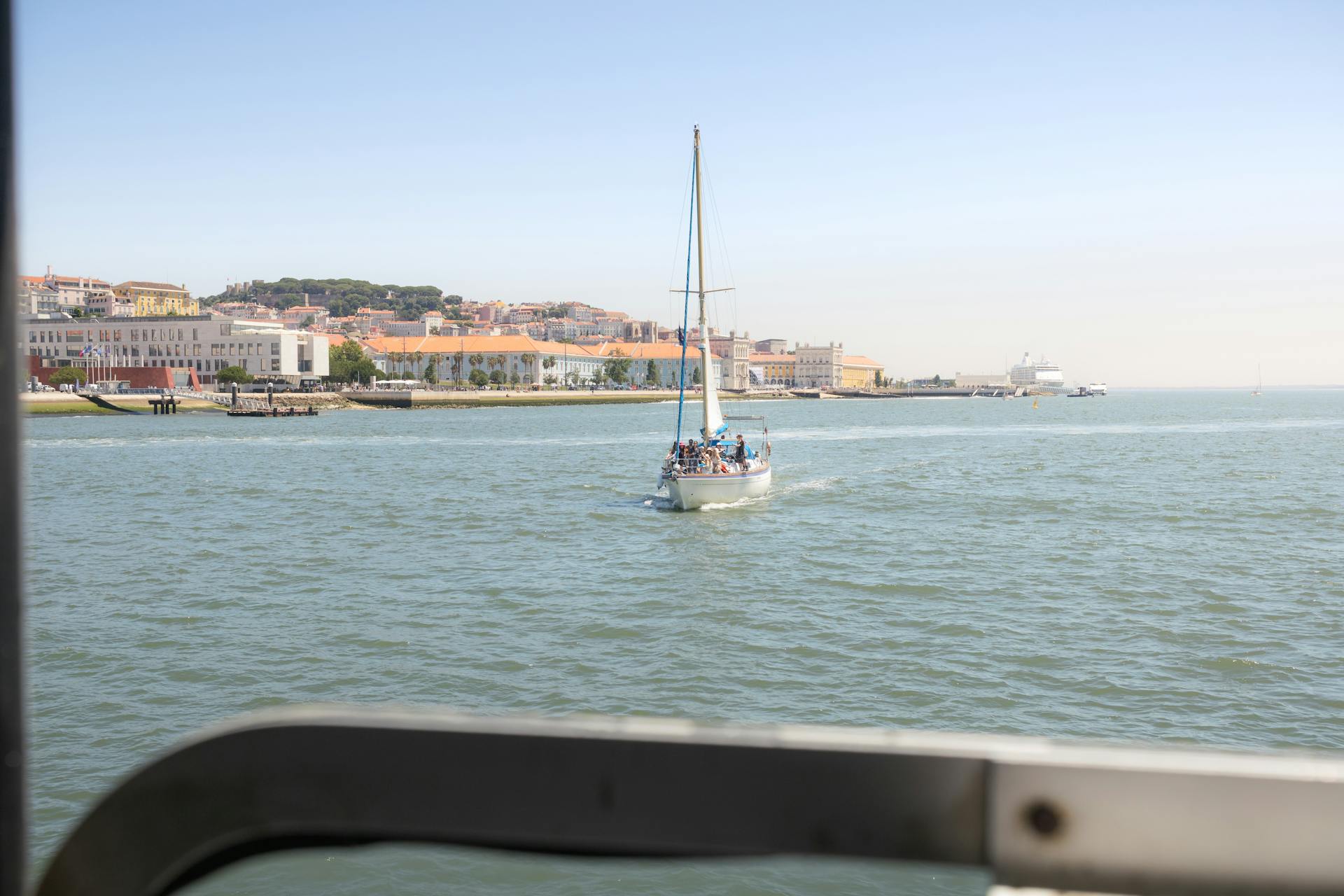
The Tagus River is central to Lisbon’s identity, and seeing the city from the water gives you a different perspective. From the river, the hills, bridge, waterfront and monuments feel more connected.
A sunset cruise is one of the most popular tourist activities in Lisbon. It works especially well for couples, first-time visitors and anyone who wants a slower evening after a day of walking.
For a cheaper alternative, take the public ferry from Cais do Sodré to Cacilhas. It is not a guided tour, but the crossing gives excellent views of Lisbon’s skyline. Once across the river, you can walk along the waterfront or continue towards restaurants with views back to the city.
This is a good reminder that not every top tourist experience needs to be expensive. Sometimes the regular ferry gives you exactly the perspective you need.
Discover LX Factory and Lisbon’s creative side
LX Factory is one of the most visited creative spaces in Lisbon. Set in a former industrial complex in Alcântara, it brings together restaurants, shops, cafés, design studios, street art and the well-known Ler Devagar bookshop.
It is not an undiscovered local secret, but it is still worth visiting if you like design-led spaces, browsing independent shops or combining lunch with a different side of Lisbon.
The location also makes it easy to pair with Belém, MAAT or the riverside around Alcântara. If you are moving between central Lisbon and Belém, LX Factory can be a good stop.
Beyond LX Factory, Lisbon has strong street art in areas such as Mouraria, Graça, Marvila and Alcântara. Some murals are easy to find, while others appear naturally as you explore.
This is a good option if you have already seen the major landmarks and want something more contemporary.
Enjoy Lisbon after dark
Lisbon changes after sunset. The viewpoints soften, the restaurants fill up, and neighbourhoods like Bairro Alto and Cais do Sodré become much livelier.
Bairro Alto is the classic area for casual drinks. It is compact, informal and busy, with small bars spilling into the streets. Cais do Sodré is more nightlife-focused, especially around Pink Street and nearby venues.
For something quieter, choose a wine bar, a fado night or a sunset viewpoint before dinner. Lisbon does not need to be a late-night city unless you want it to be.
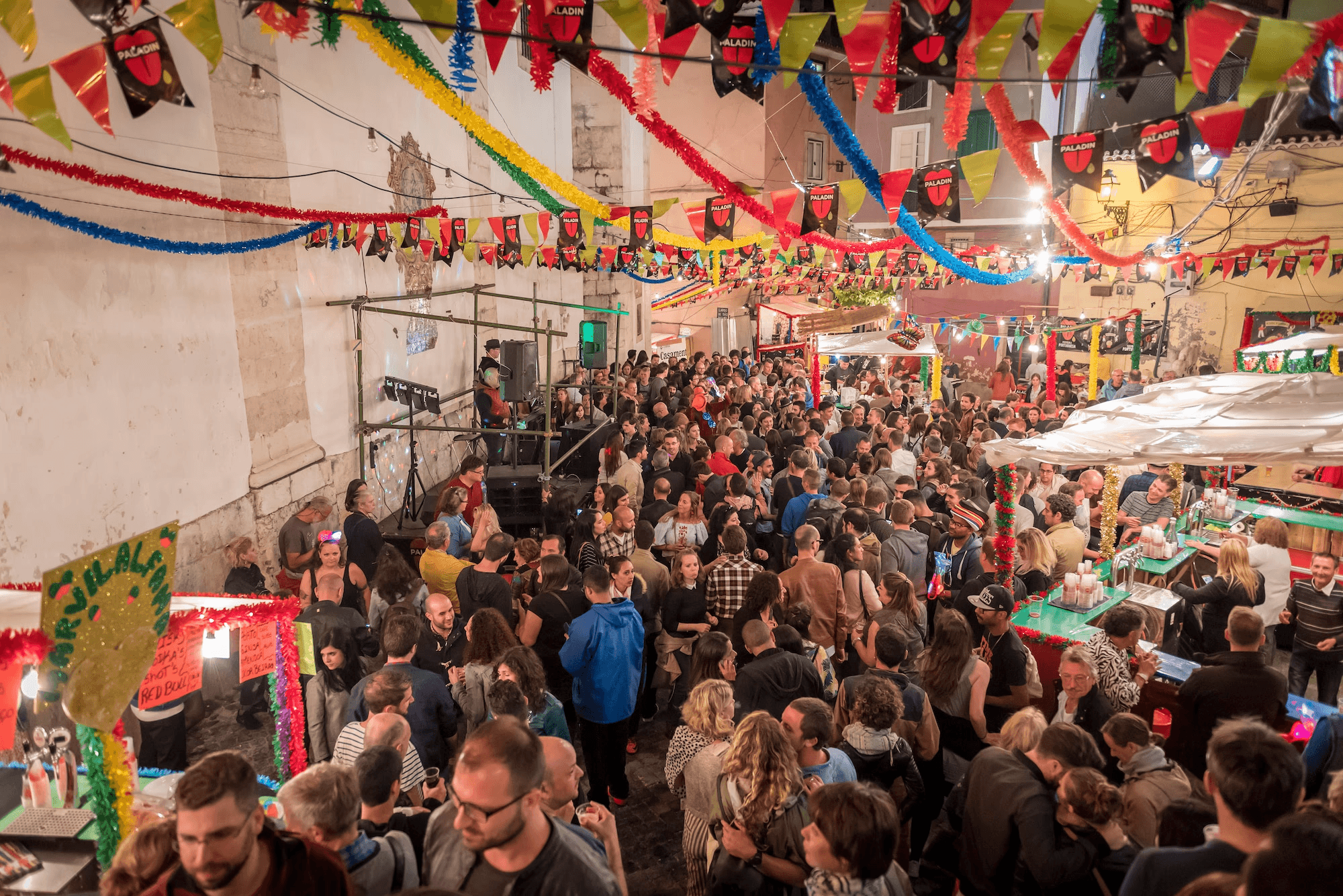
Seasonal events also matter. In June, Santos Populares brings street parties, grilled sardines and music into several neighbourhoods, especially around 12 June. If you are visiting at that time, read our guide to Santos Populares Lisbon 2026 before planning your evenings.
Take a day trip to Sintra, Cascais or the coast
Some of the best tourist things to do near Lisbon are outside the city itself. If you have more than three days, a day trip is worth considering.
Sintra is the most famous option, known for palaces, gardens and forested hills. It is beautiful but busy, so planning matters. Do not try to see everything in one day. Choose two or three main sights and leave enough time for transport.
Cascais is easier and more relaxed. The train from Cais do Sodré follows the coast, and the town works well for a seaside walk, lunch and a slower afternoon.
If you want beaches, Costa da Caparica is one of the most practical options near Lisbon. For surf culture and a more distinctive coastal town, Ericeira is also worth considering, although it needs more planning.
For car-free options, read our guide to the best day trips from Lisbon without a car.
Use public transport wisely
Lisbon is walkable, but it is not flat. Public transport helps you save energy, especially if you are visiting Belém, Parque das Nações, the airport, Sintra or Cascais.
The metro is useful for longer distances and airport access. Trams and buses help with local routes, although they can be crowded in central areas. Trains are best for Cascais and Sintra. Ferries are useful if you want to cross the Tagus.
A transport pass can be good value if you plan to use several forms of transport in one day. The Lisboa Card may also make sense if you want museum and monument access, but it depends on your itinerary.
For most tourists, the best approach is simple: walk when the area is enjoyable, use the metro for longer jumps, and avoid relying on taxis for every movement.
Read our guide to public transport in Lisbon before your trip.

How to plan your tourist itinerary
The best Lisbon itinerary mixes famous sights with breathing room. Trying to do Belém, Alfama, Tram 28, the castle, Oceanário, LX Factory, fado and a day trip in two days is technically possible, but not enjoyable.
For a first trip, plan one main area per half-day. For example, Belém in the morning, Baixa and Chiado in the afternoon. Alfama and Graça on another day. Parque das Nações or a river cruise on a lighter day.
If you have three days, focus on Lisbon itself. If you have four or five, add Sintra or Cascais. If you have a full week, you can include more neighbourhoods, beaches and slower meals.
For a clearer planning framework, read our guide on how many days you need in Lisbon.
Final thoughts
The top tourist things to do in Lisbon are a mix of landmarks, views, food, neighbourhoods and river experiences. Belém gives you history, Alfama gives you atmosphere, the viewpoints show you the city from above, and the river helps you see Lisbon from a different angle.
For a first visit, do the classics, but do not overload your days. Lisbon is at its best when you leave time to walk, stop, eat and look around properly.
Start with Belém, Alfama, Baixa, Chiado, a viewpoint, a good meal, fado if it interests you, and one river or day-trip experience. That is enough to understand why Lisbon keeps pulling visitors back.
FAQ
1. What are the top tourist things to do in Lisbon?
The top tourist things to do in Lisbon include visiting Belém, exploring Alfama, seeing the city’s viewpoints, riding a tram or funicular, trying pastéis de nata, listening to fado, visiting the Oceanário, taking a river cruise and planning a day trip to Sintra or Cascais.
2. What should tourists not miss in Lisbon?
First-time visitors should not miss Jerónimos Monastery, Belém Tower, Alfama, Praça do Comércio, at least one miradouro, a pastel de nata, a fado experience and time by the Tagus River.
3. How many days do you need for Lisbon’s main tourist attractions?
Three full days are enough for the main tourist attractions in Lisbon. Four or five days are better if you want to add Sintra, Cascais, the Oceanário, a river cruise or more relaxed neighbourhood exploring.
4. Is Lisbon easy for tourists to explore?
Yes, Lisbon is easy to explore, but it is hilly. Many central areas are walkable, but you should use public transport for longer distances, Belém, Parque das Nações, the airport and day trips.
5. What is the best area to stay in Lisbon for tourists?
Baixa, Chiado and Avenida da Liberdade are some of the most practical areas for first-time tourists. Alfama is more atmospheric, while Príncipe Real and Estrela are good if you want a slightly calmer base.
Still choosing a base? Compare our best hotels for first-time visitors.
For a short stay, compare our best hotels for a Lisbon weekend break.

Rafael Rocha
The Author
Having lived and studied in Lisbon for many years, a deep connection to the city grew naturally over time. Here I share practical guides and local recommendations to help you experience Lisbon better.
Buy me a coffee