What to eat at Santos Populares in Lisbon
From grilled sardines and bifanas to caldo verde, peppers and manjerico, here’s what to eat and drink during Santos Populares in Lisbon.
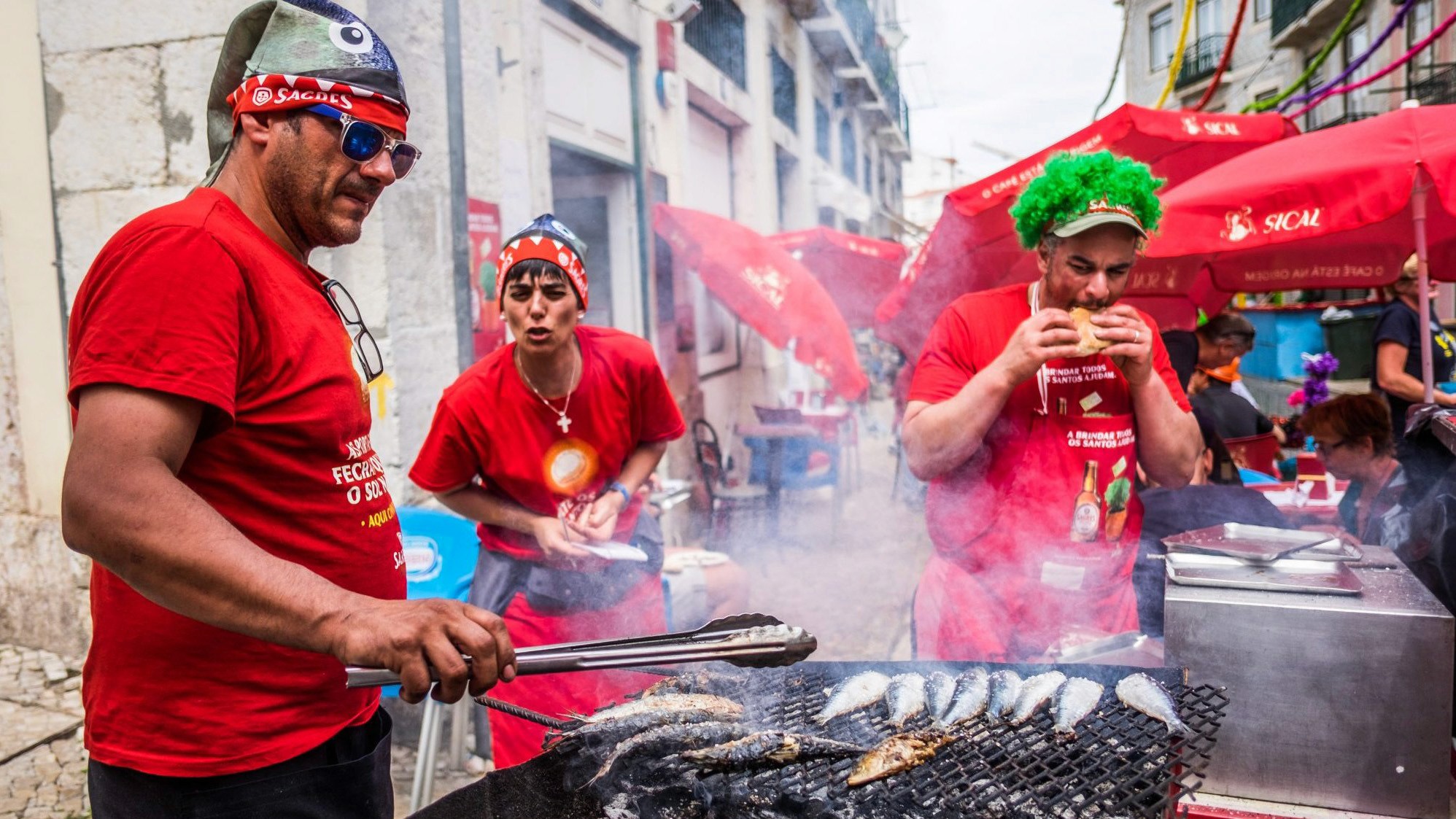
Food is one of the easiest ways to understand Santos Populares in Lisbon. Before you see the decorations, before you hear the music properly, you will probably smell the festival first: grilled sardines, charcoal, peppers, beer, wine and warm June evenings in the old neighbourhoods.
In this article, you’ll find a practical guide to what to eat at Santos Populares in Lisbon, including the classic dishes, drinks, street food tips and what tourists should know before ordering at an arraial.
For the full festival overview, start with our guide to Santos Populares Lisbon 2026.
Why food matters during Santos Populares
Santos Populares is not a seated, polished food festival. It is a neighbourhood celebration. Food is cooked outdoors, eaten standing up, passed between friends and usually enjoyed while music plays somewhere nearby.
In June, Lisbon’s neighbourhoods are filled with the smell of grilled sardines, peppers and manjerico, the aromatic basil closely linked to the celebrations. Visit Lisboa describes the city’s arraiais as outdoor festivities marked by food, loud Portuguese music, decorated streets and crowds dancing across different neighbourhoods.
That is the right mindset to bring with you. Do not expect white tablecloths, complex menus or perfect service. Expect smoke, queues, plastic cups, simple food and a city that feels like it has moved dinner into the street.
Grilled sardines
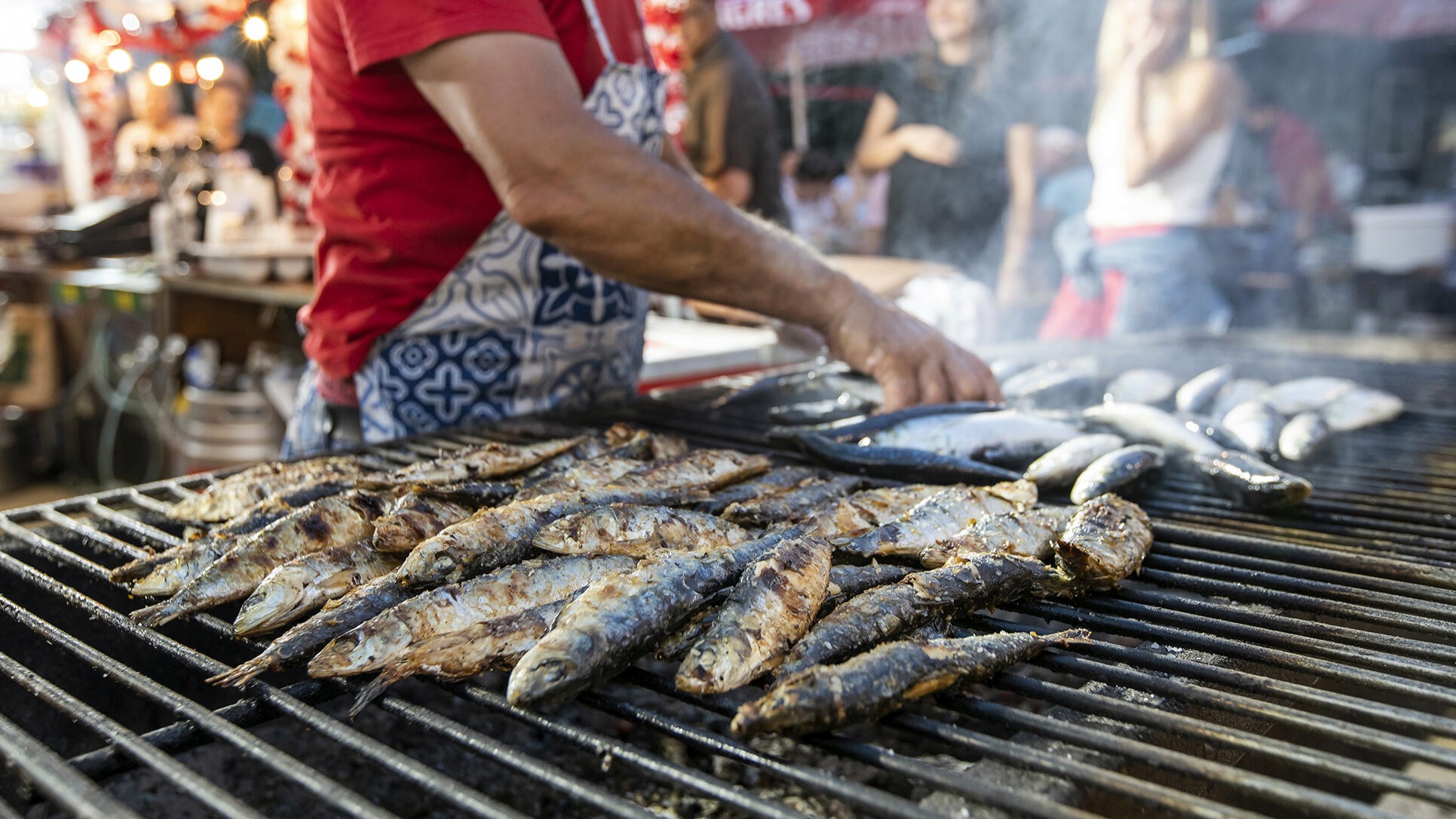
Grilled sardines are the symbol of Santos Populares in Lisbon. They are smoky, salty, simple and everywhere during the festival.
The classic way to eat them is on a slice of bread, often with the sardine placed directly on top so the bread absorbs the juices. Some places serve them with boiled potatoes, salad or roasted peppers, but the simplest version is usually the most traditional.
If you are not used to eating whole fish, sardines can feel a little messy at first. That is normal. Santos Populares is not the moment to worry too much about elegant dining. Watch how locals do it, use your hands when needed and keep a napkin nearby.
Even if you are not usually a sardine fan, try at least one during the festival. It is part of the experience.
Roasted peppers
Roasted peppers are another classic smell of June in Lisbon. They are often grilled alongside sardines and served as a simple side.
They add sweetness, smoke and colour to a plate that might otherwise be very salty and intense. If you order sardines and see peppers on the menu, they are usually a good idea.
Visit Lisboa specifically mentions grilled sardines, peppers and manjerico as some of the typical aromas of Santos Populares in Lisbon.
Bifanas
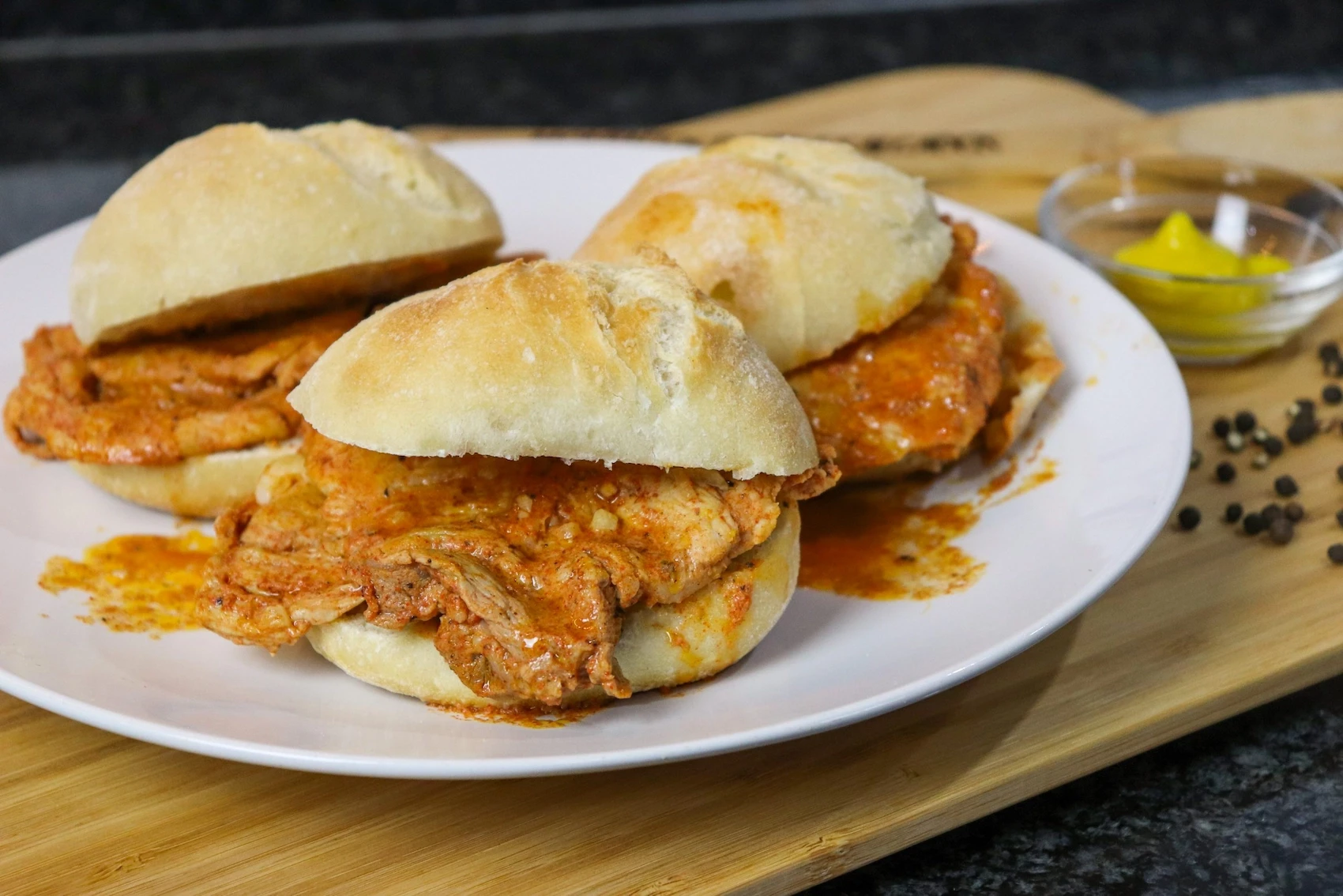
A bifana is a Portuguese pork sandwich, usually made with thin slices of pork in a soft bread roll. During Santos Populares, it is one of the easiest things to eat while walking around.
Bifanas are practical because they are quick, filling and less messy than sardines. If you are hungry but do not want to deal with bones, plates or a crowded table, this is a safe choice.
They are also a good option if you are travelling with someone who does not eat fish. Sardines may be the star of the festival, but bifanas are often the more convenient street-food choice.
Grilled pork and chouriço
Alongside sardines and bifanas, you will often find grilled pork, sausages and chouriço at neighbourhood parties.
This kind of food is simple, smoky and made for eating outdoors. It is not always the lightest meal, but it fits the atmosphere perfectly. If you are staying out for several hours, a grilled meat sandwich or plate can be useful before the night gets busier.
Chouriço is especially good if you want something with stronger flavour. It is usually salty, smoky and rich, so it works best with bread and a drink.
Caldo verde
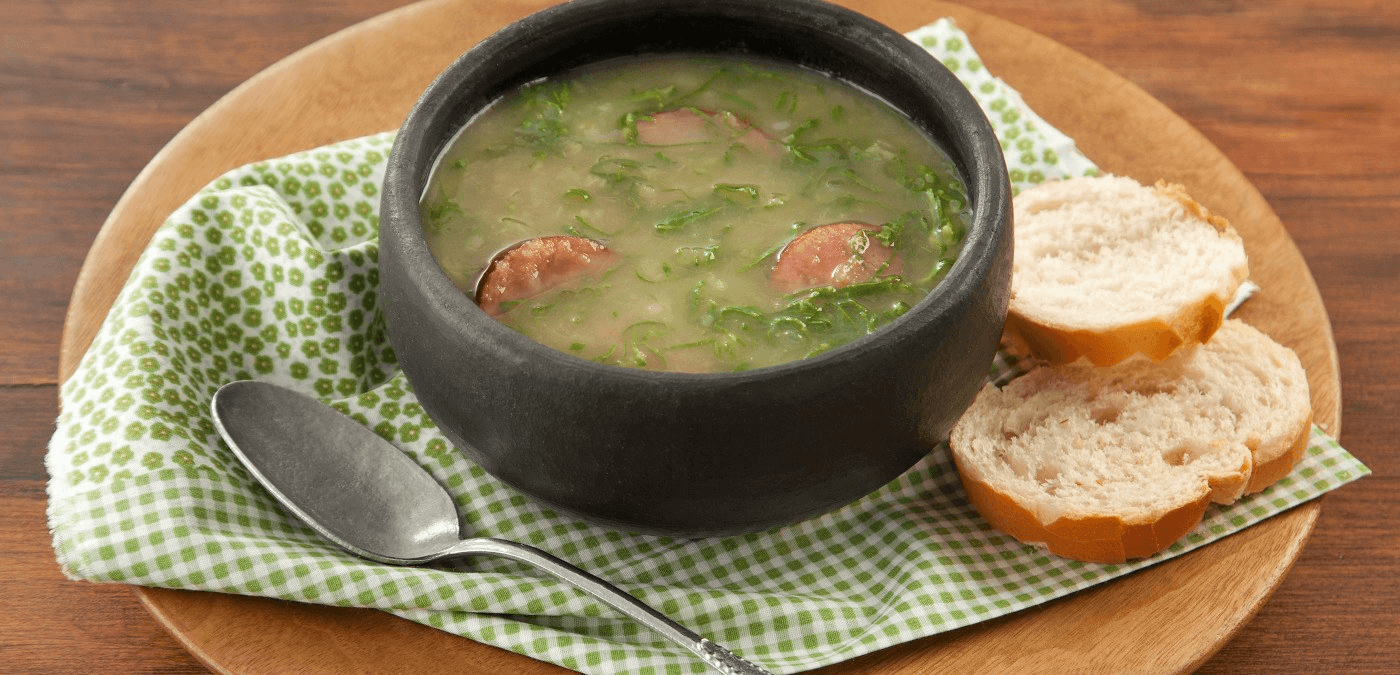
Caldo verde is a traditional Portuguese soup made with potato, finely sliced greens and often chouriço. It may sound like a winter dish, but it is commonly associated with popular festivities and appears during Santos Populares too.
Visit Portugal describes Lisbon’s Popular Saints celebrations as nights when people eat cabbage soup and grilled sardines in squares and alleyways while singing and dancing.
If you want something warm but not too heavy, caldo verde is a good choice. It is simple, comforting and very Portuguese. It also balances well with the grilled food and drinks that dominate the evening.
Bread
Bread is everywhere during Santos Populares, and it is more important than it looks.
It holds bifanas. It absorbs sardine juices. It turns grilled meat into something you can eat while standing. It helps if you are drinking. It also makes the whole festival slightly easier to manage when seating is limited and the streets are crowded.
If you are ordering sardines, do not be surprised if bread is part of the experience rather than just a side.
Beer and wine
Beer and wine are the most common drinks during Santos Populares. Beer is easy, cold and practical for walking around. Wine is also common, especially in more traditional neighbourhood settings.
Expect simple drinks rather than cocktail menus. The point is not sophistication; it is convenience and atmosphere.
If you are planning to stay out late, pace yourself. Santos Populares can be a long night, especially on 12 June. Crowds, hills, smoke and warm weather can make the evening more tiring than expected.
Manjerico
Manjerico is not something you eat, but it is one of the most important symbols of Santos Populares.
This small basil plant is traditionally sold during the celebrations, often with a paper carnation and a short popular verse. It is strongly associated with Santo António and Lisbon’s June festivities.
You will see manjericos at stalls, in decorations and in the hands of people walking around the city. The traditional idea is not to smell the plant directly with your nose, but to pass your hand gently over it and then smell your hand.
It is a small detail, but it helps you understand the festival better. Santos Populares is not just food and music. It is full of little rituals and symbols that Lisbon repeats every June.

Should you eat at a street party or in a restaurant?
Both can work, but they offer very different experiences.
Eating at a street party is the most authentic version. You stand in line, order something simple, eat outdoors and stay close to the music and crowds. It is informal, sometimes chaotic and very much part of the festival.
Eating in a restaurant is more comfortable. You can sit down, avoid the longest queues and start the evening calmly before joining the celebrations. This is a good option if you are travelling with children, visiting with older relatives or simply want a proper meal before the streets become packed.
A good plan is to eat early in a restaurant, then move into the arraiais afterwards. For ideas, use our guide to the best local restaurants in Lisbon.
Best neighbourhoods for festival food
You can find food across many neighbourhoods during Santos Populares, but the atmosphere changes depending on where you go.
Alfama is the classic choice. It is traditional, atmospheric and full of narrow streets where food stalls and grills feel part of the neighbourhood. It is also very crowded, especially on 12 June.
Graça is a strong alternative, with a local feel and good access to viewpoints before the evening begins. If you want to explore the area before the celebrations, read our guide to what to see in Graça.
Mouraria is lively and central, with easy access to Alfama, Martim Moniz and the castle area. Bica is better if you want a louder, more nightlife-focused atmosphere. Santos can be practical if you want a festive evening with slightly easier movement than in the tightest old streets.
If you are mainly interested in the street-party side of the festival, read our guide to Lisbon street parties in June.
How much does food cost at Santos Populares?
Prices vary depending on the neighbourhood, the stall and the night. Expect simple festival prices rather than restaurant prices, although the busiest and most tourist-heavy areas may be more expensive.
A bifana or simple sandwich is usually one of the more affordable and practical choices. Sardines can vary more depending on portion size and where you buy them. Drinks are normally straightforward, but prices may increase in the busiest areas.
Bring cash. Cards are widely used in Lisbon, but small stalls at crowded arraiais can be quicker and easier with cash. Some may not accept cards at all, and ATM queues can become annoying on the busiest nights.
Practical food tips for tourists
Eat earlier than you normally would. On the main night, queues get longer as the evening goes on, especially in Alfama, Graça and other popular areas.
Do not expect everything to be available all night. Popular items can sell out, and some stalls become overwhelmed when the streets are full.
Carry tissues or napkins. Sardines, grilled meat and crowded street eating are not always tidy.
Do not overplan your meal. Part of the fun is walking around, seeing what smells good and choosing a stall that feels lively but manageable.
If you have dietary restrictions, plan ahead. Santos Populares food is heavily based on fish, pork, bread and grilled items. Vegetarian options may exist in restaurants nearby, but traditional street-party food can be limited.
What to avoid
Avoid waiting until you are starving. Crowds, queues and slow movement can make it harder to find food quickly.
Avoid carrying large bags while eating in crowded streets. You will be standing, moving and possibly holding food and a drink at the same time.
Avoid expecting restaurant-level service from a street-party stall. The pace is fast, the setup is temporary and the night is busy for everyone.
Also avoid trying to eat in the most crowded narrow streets if you feel uncomfortable. Move to a wider square or side street where you can breathe a little.
Can you enjoy the food without staying out late?
Yes. You do not need to stay until the early morning to enjoy the food side of Santos Populares.
Go out in the early evening, before the biggest crowds arrive. Walk through one neighbourhood, try sardines or a bifana, have a drink, enjoy the decorations and leave before the streets become too packed.
This is often the best option if you are visiting Lisbon with children, travelling alone or simply prefer the cultural side of the festival to the party side.
For a broader plan around the night itself, read our guide to visiting Lisbon during Santos Populares.
Final thoughts
Eating at Santos Populares in Lisbon is not about finding the perfect dish. It is about joining the rhythm of the city in June.
Try the sardines, order a bifana if you want something easier, look for roasted peppers, have caldo verde if you see it, and pay attention to the manjericos around you. The food is simple, but the atmosphere makes it memorable.
Bring cash, eat early, wear comfortable shoes and do not worry if things get a little messy. During Santos Populares, that is usually part of the point.
FAQ
1. What is the most traditional food at Santos Populares in Lisbon?
Grilled sardines are the most traditional food at Santos Populares in Lisbon. They are often served on bread or with simple sides such as potatoes, salad or roasted peppers.
2. What else can you eat besides sardines?
Besides sardines, you can usually find bifanas, grilled pork, chouriço, caldo verde, bread, beer and wine at neighbourhood street parties.
3. Is manjerico edible?
Manjerico is not normally eaten during Santos Populares. It is a small basil plant associated with the festival and often sold with a paper carnation and a popular verse.
4. Should I bring cash for food at Santos Populares?
Yes. Cards are common in Lisbon, but small festival stalls can be easier and faster with cash, especially during the busiest nights.
5. Can vegetarians eat at Santos Populares?
Traditional Santos Populares food is heavily based on sardines, pork, sausages and bread, so vegetarian options at street stalls may be limited. If you are vegetarian, it is better to eat at a restaurant first or check options nearby before joining the busiest celebrations.

Rafael Rocha
The Author
Having lived and studied in Lisbon for many years, a deep connection to the city grew naturally over time. Here I share practical guides and local recommendations to help you experience Lisbon better.
Buy me a coffee