Lisbon food guide: what to eat and where to go
A practical guide to Lisbon food guide, including what to order, where to start, local tips and how to avoid disappointing touristy choices.

Lisbon is easy to eat badly if you stay on the most obvious streets and assume every crowded terrace must be good. It is also easy to eat well once you understand how the city eats: coffee and a pastry, a proper lunch, a counter snack and seafood or petiscos shared over dinner.
This Lisbon food guide covers what to order, where to start and which famous places are worth your time, from pastéis de nata and bifanas to bacalhau, grilled fish, seafood and wine.
Lisbon food guide: the quick answer
If you have limited time, build your food plan around five experiences:
Eat a warm pastel de nata at Manteigaria in central Lisbon or Pastéis de Belém when visiting Belém.
Order a bifana at a simple counter such as O Trevo rather than turning it into a formal meal.
Try one well-prepared bacalhau dish, ideally bacalhau à Brás or bacalhau à lagareiro.
Have grilled fish or shellfish at a traditional restaurant away from the busiest tourist strip.
Finish an evening with Portuguese wine, petiscos or a small glass of ginjinha.
For a longer list of local specialities, see our guide to what to eat in Lisbon: 20 dishes to try. If choosing restaurants is your main concern, start instead with our guide to the best local restaurants in Lisbon.
Start with a pastel de nata and coffee
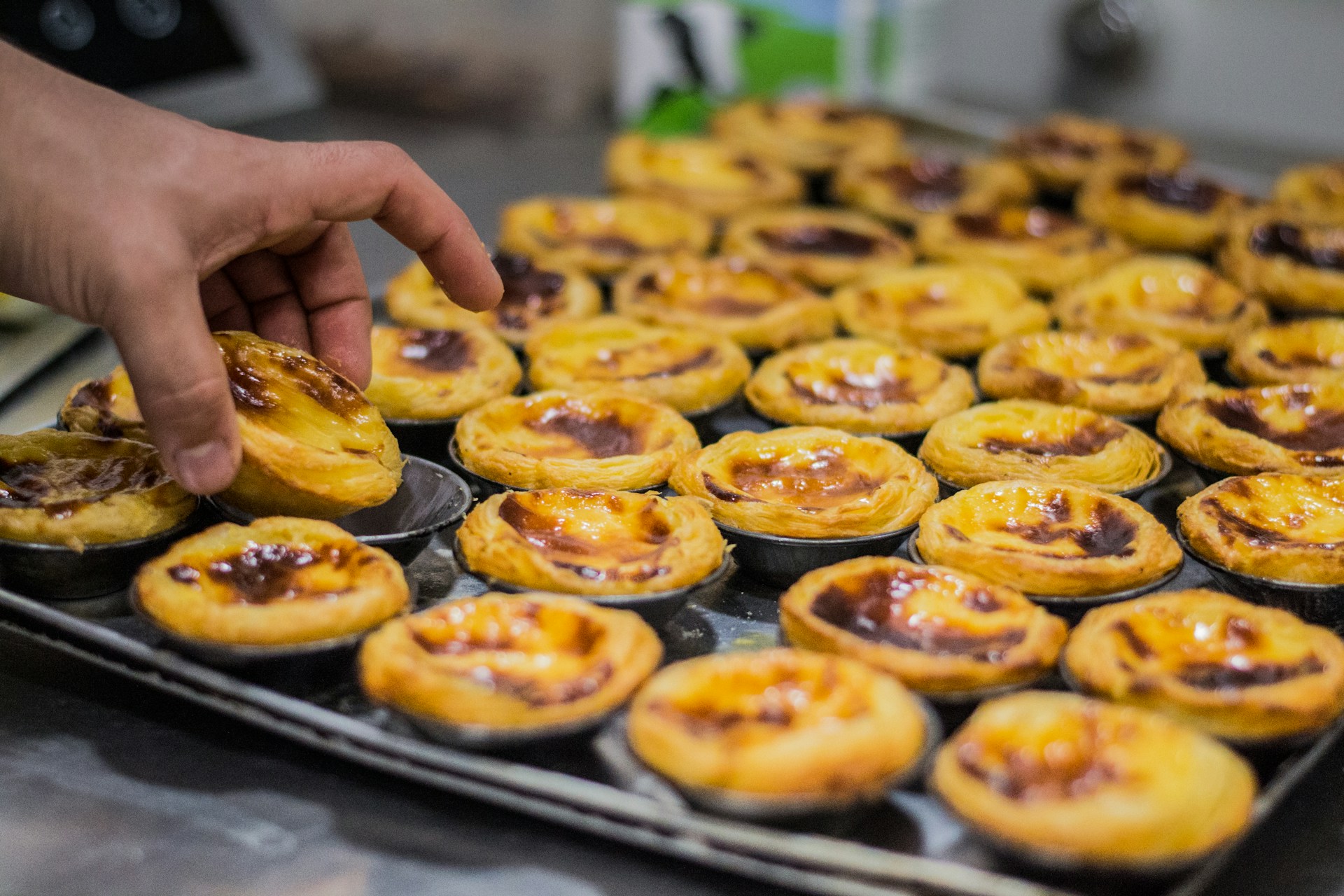
A pastel de nata should be crisp outside, freshly baked and creamy without feeling heavy. Add cinnamon if you like. Order a bica for a Lisbon-style espresso or a meia de leite for something milder.
Manteigaria is a reliable recommendation in Chiado, Baixa and elsewhere in Lisbon. Production is visible and turnover is high. Pastéis de Belém remains worth visiting when exploring Belém. It is busy, but its historic setting and distinct recipe make it a genuine experience.
Do not cross the whole city for a long queue if your itinerary does not take you nearby. Lisbon has several excellent alternatives, which we compare in our guide to the best pastéis de nata in Lisbon.
Try a bifana as a snack, not a restaurant event
A bifana is a soft bread roll filled with seasoned pork, sometimes cooked in a sauce with wine and spices. Mustard or piri-piri is often available.
O Trevo in Chiado is a central, inexpensive first stop. As Bifanas do Afonso, near Praça da Figueira, is another popular choice, although queues form. Order, eat at the counter or a small table, and continue your day.
Choose the right bacalhau dish
Bacalhau is salted cod, and the preparation matters. Bacalhau à Brás combines shredded cod with onions, thin fried potatoes and egg. Bacalhau à lagareiro serves a substantial piece of fish with olive oil, garlic and potatoes. Pastéis de bacalhau are cod fritters best treated as a snack or starter.
Laurentina and Casa do Bacalhau are established specialist choices. Zé da Mouraria offers a more characterful, generous version of traditional Lisbon dining. Portions can be large, so ask before ordering several starters.
Our dedicated guide to where to eat bacalhau in Lisbon explains which restaurant suits each style.
Eat sardines in season and grilled fish all year
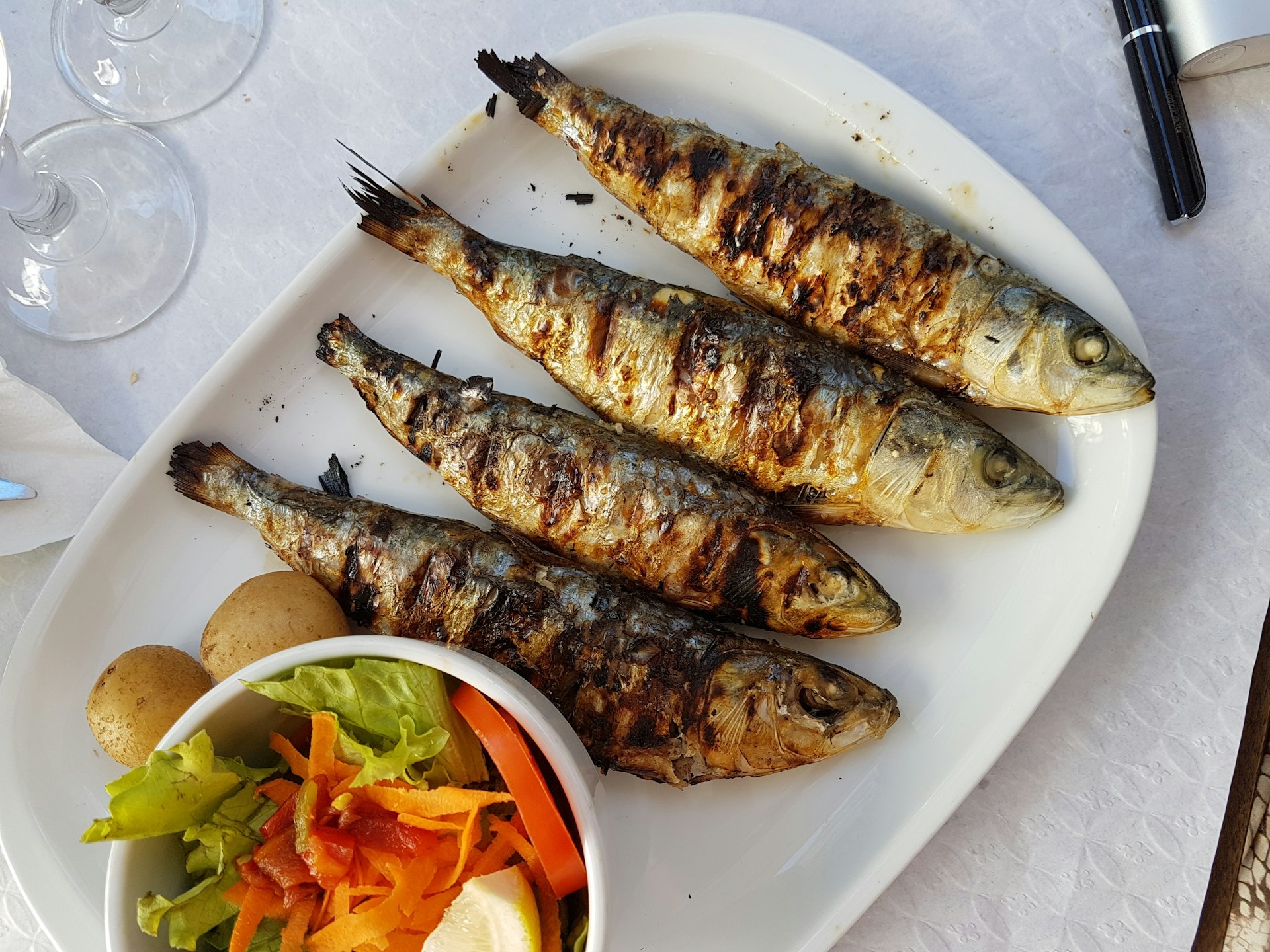
Grilled sardines are closely associated with Lisbon, especially during Santos Populares in June. They are best in late spring and summer, served with bread, potatoes, salad or peppers. Outside the main season, choose another fresh fish rather than ordering them only because a menu calls them “typical.”
Dourada, robalo and carapau are common grilled choices. If fish is priced by weight, ask for the approximate total before ordering.
If you visit in June, our guide to what to eat at Santos Populares covers sardines, caldo verde, bifanas and the practicalities of eating at the street parties.
Make seafood one of your main meals
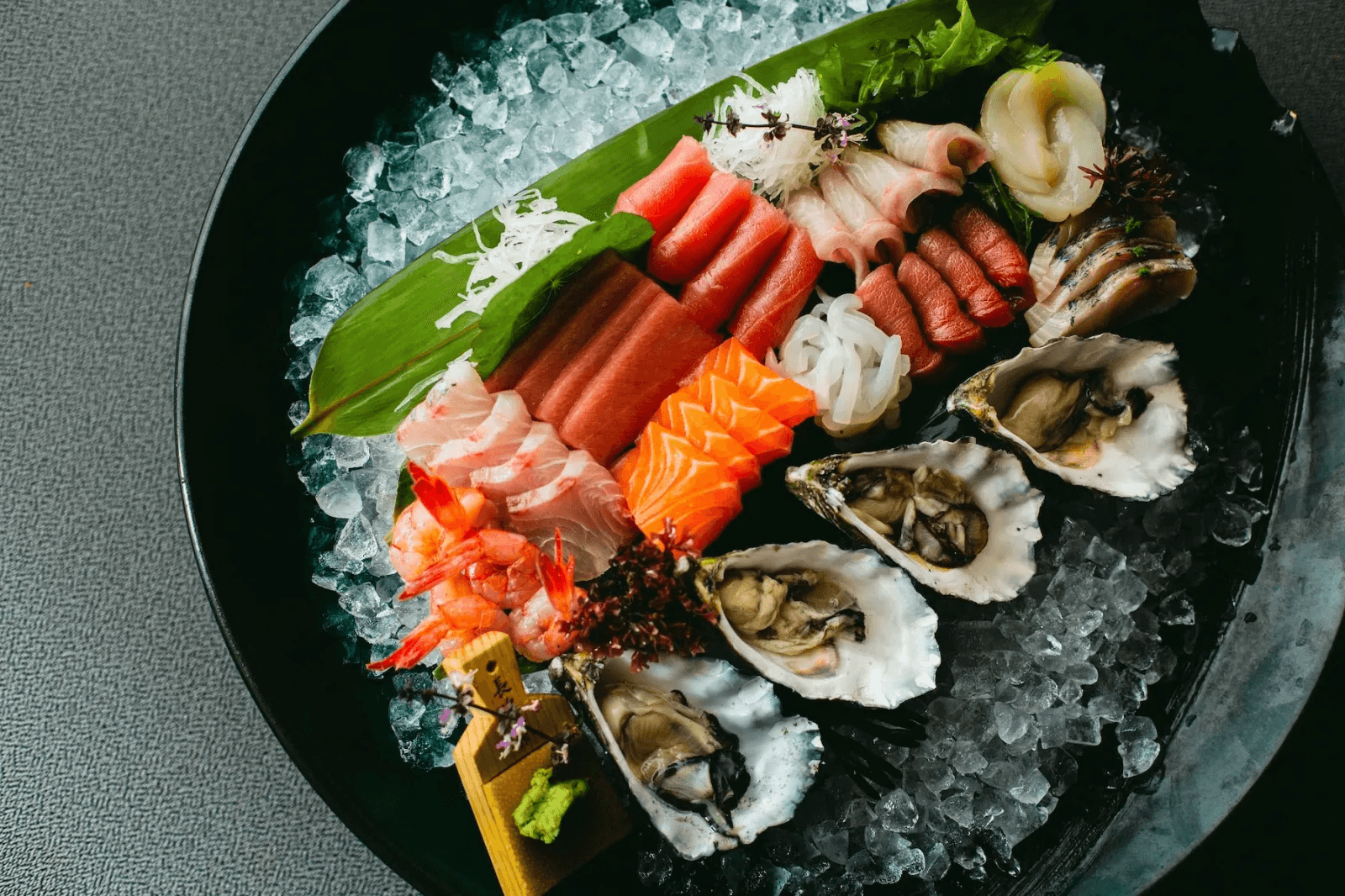
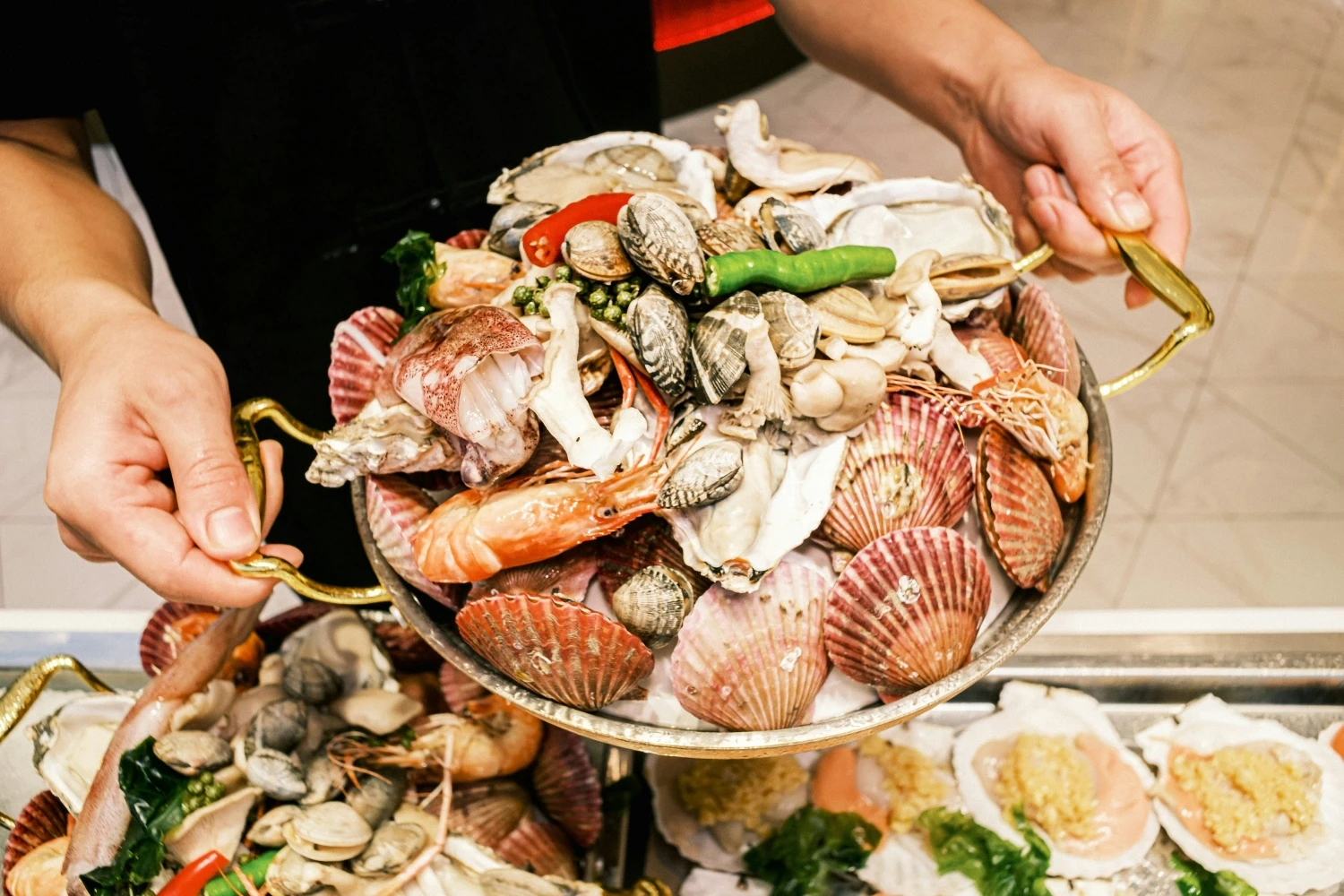
Seafood can range from a modest plate of clams to an expensive display selected by weight. Amêijoas à Bulhão Pato — clams with garlic, olive oil, coriander and lemon — are an excellent first order. Other options include garlic prawns, percebes, crab and seafood rice.
Cervejaria Ramiro is famous and crowded, yet worthwhile for a lively seafood experience. Reserve or use its queue system and avoid over-ordering. A local tradition is to finish the shellfish with a prego, a small steak sandwich.
For something less focused on a single famous address, compare the seafood and traditional choices in our guide to the best Portuguese restaurants in Lisbon.
Use tascas and petiscos to explore beyond the headline dishes
A tasca is traditionally an informal neighbourhood restaurant serving affordable Portuguese cooking. Some current “tascas” are polished reinterpretations; others remain everyday lunch spots.
Look for handwritten daily specials, short menus and dishes such as arroz de pato, polvo à lagareiro, iscas, feijoada or grilled pork. O Velho Eurico offers an energetic contemporary take on tasca food near Mouraria.
For more traditional choices across the city, use our guide to the best tascas in Lisbon.
Petiscos are small Portuguese dishes for sharing, not simply another word for Spanish tapas. Order two or three first, then add more. Cheese, cured meats, croquettes, octopus salad, clams and peixinhos da horta can become a full dinner.
Are Lisbon food markets worth it?
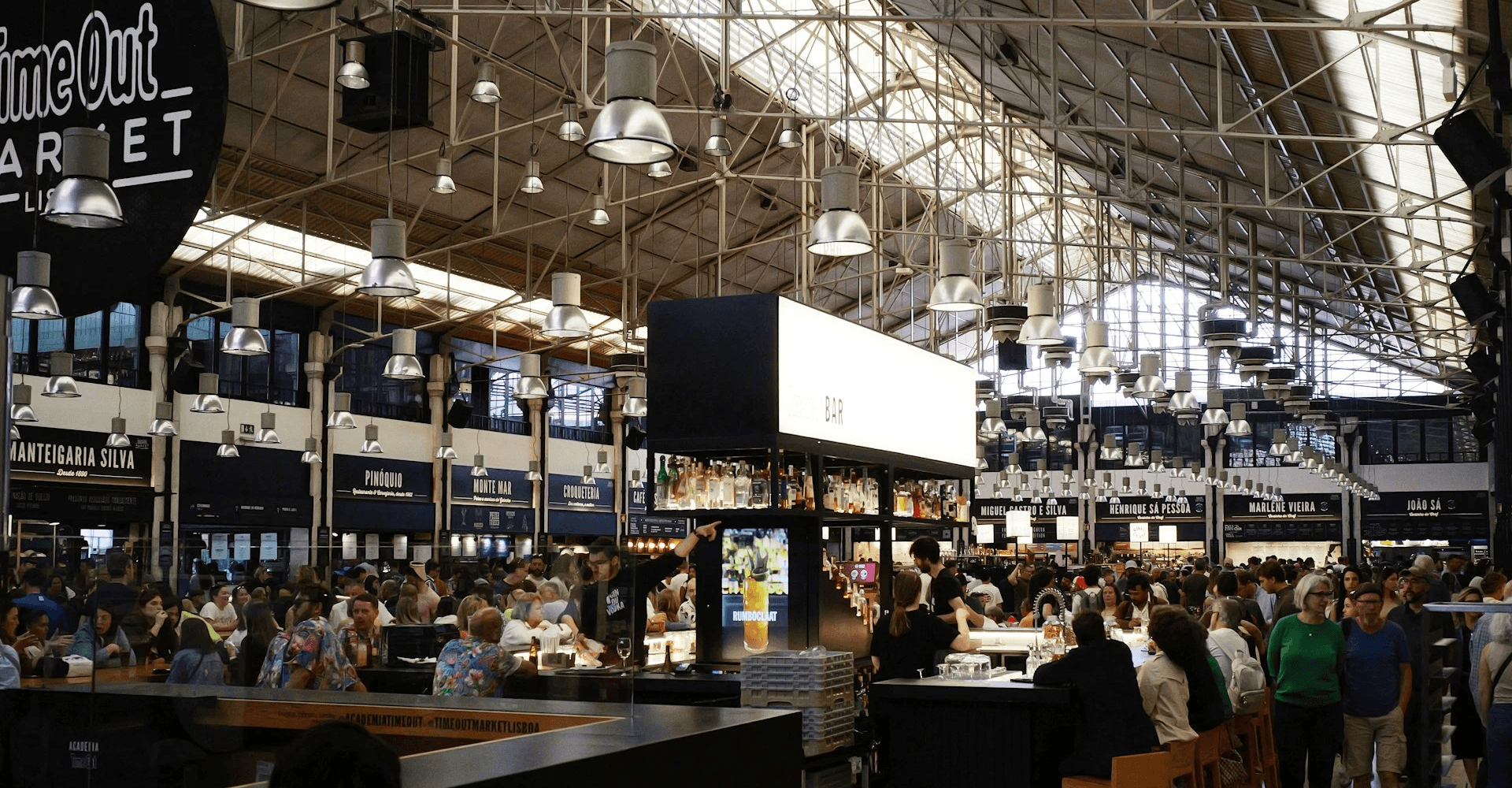
Time Out Market Lisboa suits groups wanting different foods and rainy days. It is central and convenient, but busy, noisy and generally more expensive than a neighbourhood lunch. Treat it as a curated food hall, not a hidden local market.
Mercado de Campo de Ourique feels smaller and calmer, while Alvalade, Arroios and 31 de Janeiro retain more neighbourhood activity. Not every traditional market is a dining destination. Our guide to the best food markets in Lisbon compares them.
A practical one-day Lisbon food route
Begin with coffee and a pastel de nata in Baixa or Chiado. At lunch, choose a daily menu or bacalhau dish. Have a bifana later only if you are hungry.
For dinner, book a seafood, tasca or petiscos restaurant. Afterwards, try ginjinha near Rossio or one of the best wine bars in Lisbon. Look beyond port to Vinho Verde, Dão, Alentejo, Douro, Madeira and Setúbal.
This gives each speciality a place. Eating a nata, bifana, cod fritter, seafood rice and petiscos dinner within hours is a reliable way to enjoy none properly.
How to avoid disappointing touristy restaurants
Tourist-oriented does not automatically mean bad. Pastéis de Belém and Ramiro offer something distinctive. The problem is choosing a generic restaurant based only on location.
Avoid staff aggressively recruiting diners, enormous menus covering unrelated cuisines and faded food photographs. Check recent reviews for specific dishes, not only the average rating.
Lunch often offers the best value. Look for prato do dia or menu do dia. Bread, olives and other couvert items may be charged if you eat them; you can decline them.
To turn the dishes above into a practical eating plan, browse our favourite Portuguese restaurants in Lisbon. For a guided introduction with local context, compare food tours in Lisbon.
Frequently asked questions
1. What food is Lisbon most famous for?
Lisbon is especially associated with pastéis de nata, bifanas, bacalhau dishes, grilled sardines, shellfish and ginjinha. Seafood and simple grilled fish are central to the city’s food culture, while pastries and counter snacks are part of everyday café life.
2. Where should a first-time visitor eat in Lisbon?
Combine one reliable central stop, such as Manteigaria or O Trevo, with a booked seafood or Portuguese dinner and one neighbourhood market or tasca. Baixa and Chiado are convenient, but Mouraria, Arroios, Campo de Ourique and Alvalade broaden the experience.
3. Is Time Out Market Lisbon a tourist trap?
No, but it is designed for convenience and variety rather than a quiet local meal. It is useful for groups and first-time visitors, although prices and crowds can make a neighbourhood market or tasca a better choice for a traditional lunch.
4. Do I need restaurant reservations in Lisbon?
Reserve popular restaurants for dinner, especially from Thursday to Saturday and during summer. Simple cafés, bifana counters and many traditional lunch spots usually do not require booking, but arrive before peak lunch hours if a particular place matters to you.

Rafael Rocha
The Author
Having lived and studied in Lisbon for many years, a deep connection to the city grew naturally over time. Here I share practical guides and local recommendations to help you experience Lisbon better.
Buy me a coffee