Where to stay in Lisbon with kids: best areas & hotels
Discover where to stay in Lisbon with kids, including the best family areas, recommended hotels, booking tips and honest local trade-offs.

Lisbon is rewarding to explore as a family, but choosing the right base matters. The historic centre is convenient, yet hills, cobbles and nightlife can make some addresses difficult with a pushchair. Quieter neighbourhoods offer more space but usually require longer journeys.
In this guide, we compare the best areas to stay in Lisbon with kids, explain who each neighbourhood suits and suggest practical family-friendly hotels. You will also find honest trade-offs and booking tips to help you avoid common mistakes.
Where to stay in Lisbon with kids: the quick answer
For most first-time visitors, Baixa is the best all-round choice: central, relatively flat and well connected. Chiado has more atmosphere and restaurants, but is hillier and usually more expensive.
For a quieter stay, consider Estrela or Campo de Ourique. Choose Belém for museums and riverside space, or Parque das Nações for flat streets and the Oceanário. Avenida da Liberdade and Marquês de Pombal balance location with hotel comfort.
You can also read our complete guide to the best neighbourhoods in Lisbon before deciding.
Baixa: best for first visits, short stays and pushchairs. The main disadvantage is that it can feel busy and tourist-oriented.
Chiado: best for sightseeing, restaurants and family apartments. Expect hills and higher prices.
Avenida and Marquês: best for transport and full-service hotels, but with less historic atmosphere.
Estrela and Campo de Ourique: best for longer stays and a more local experience. Most attractions require transport.
Belém: best for museums, gardens and a slower pace. It is farther from central Lisbon and has no metro.
Parque das Nações: best for toddlers, modern comfort and the Oceanário, but removed from historic Lisbon.
Baixa: best for a first family trip
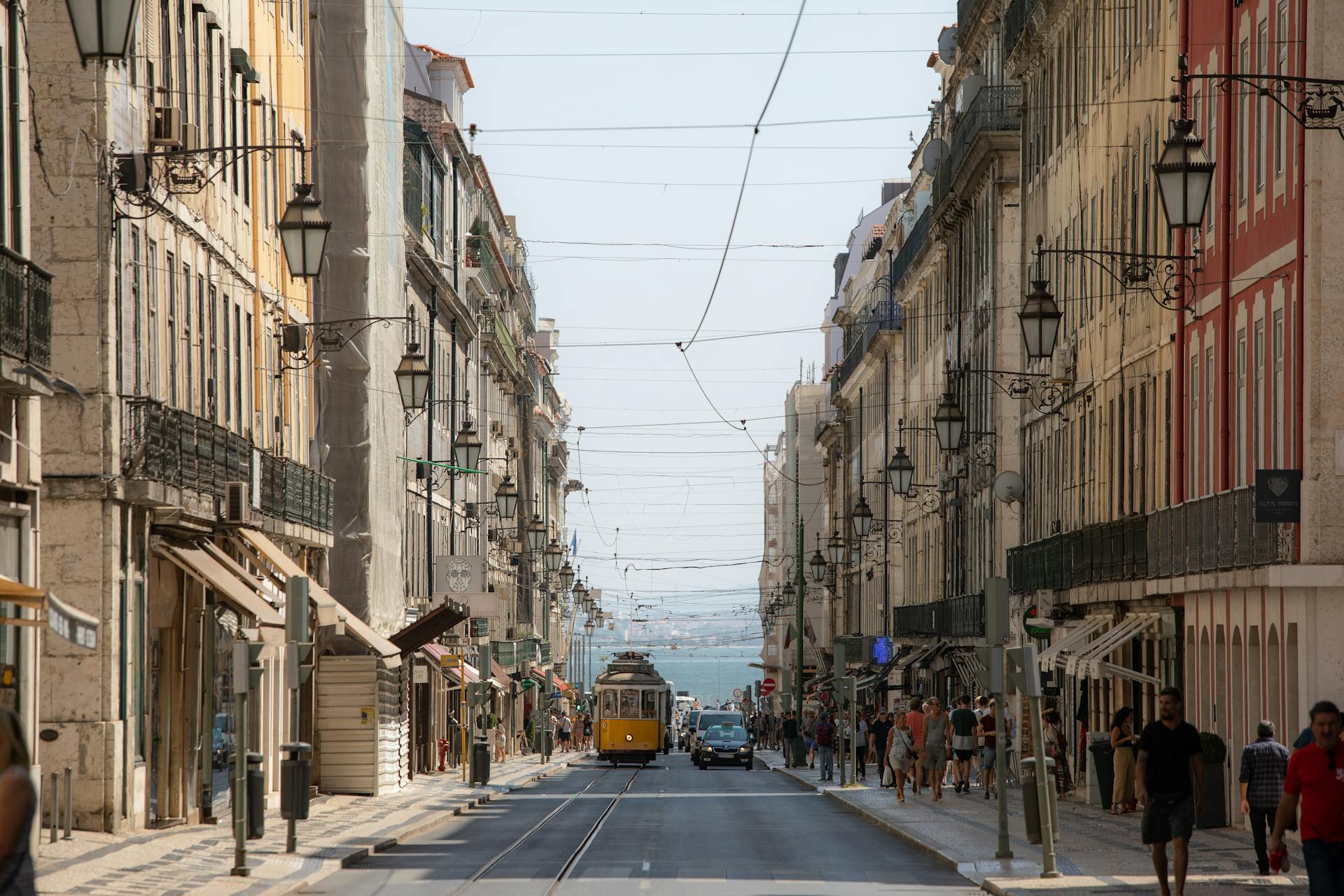
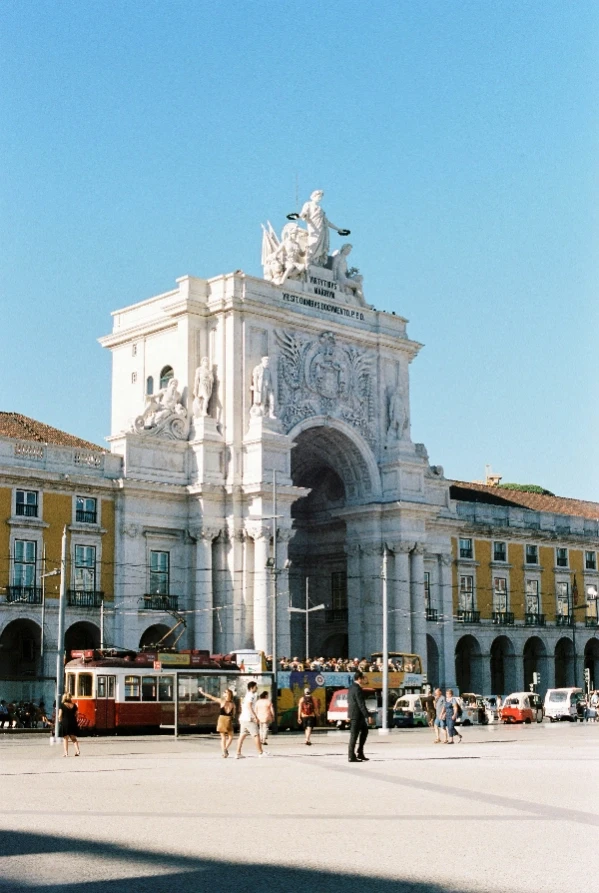
Baixa is the most practical part of the historic centre. Its grid is flatter than the surrounding hills, while Praça do Comércio, Rossio and the riverfront are nearby. Public transport serves other districts, and trains to Sintra leave from Rossio. If you are planning that excursion, see our guide on how to get from Lisbon to Sintra.
Baixa works particularly well for a short visit, although Rua Augusta and the nearby streets can feel crowded. Light sleepers should check recent noise reviews and request a room away from the busiest pedestrian routes.
Hotel da Baixa has dedicated family rooms with capacity for up to five people. Dare Lisbon House combines a central address with apartment-style accommodation and kitchenettes.
The main trade-off is that Baixa is convenient rather than calm. It makes sightseeing easier but does not offer the most residential or local Lisbon experience.
Chiado: best for location, dining and family apartments
Chiado sits above Baixa, combining a central location with historic cafés, shops, theatres and excellent dining. It suits parents who want attractions and restaurants within walking distance and prefer to limit the number of daily journeys.
However, the exact address matters. Some streets slope sharply towards the river, pavements can be narrow and a route that looks short on a map may involve steps. Check the final approach to the hotel if you are bringing a pushchair.
Martinhal Lisbon Chiado is one of the best family hotels in Lisbon. Its serviced apartments have kitchen facilities, while the property also offers a supervised kids’ club and family playroom. It is especially practical when travelling with younger children, although it comes at a premium.
Chiado balances atmosphere and convenience, but family-sized accommodation can be expensive. It is also less pushchair-friendly than Baixa.

Avenida da Liberdade and Marquês de Pombal: best for hotel comfort
This part of Lisbon bridges the historic centre and the more modern areas of the city. Several metro stations are nearby, Parque Eduardo VII provides useful outdoor space and taxi access is generally easier than in the narrow streets of the old town.
The area suits families who prefer full-service hotels, larger rooms, breakfast facilities and straightforward transport connections.
Altis Prime is an aparthotel with spacious units and equipped kitchenettes. Families prioritising a swimming pool can also consider hotels around Avenida da Liberdade and Saldanha.
Always check whether the pool is seasonal and whether children have restricted access or specific swimming hours. “Indoor pool” does not automatically mean that children can use it throughout the day.
Transport connections and hotel choice are excellent, but the neighbourhood has less historic character than Baixa or Chiado. The walk back from downtown is also uphill, which can be tiring at the end of the day.
Estrela and Campo de Ourique: best for a quieter local stay
Estrela and Campo de Ourique feel residential and relaxed, with supermarkets, bakeries, cafés and neighbourhood restaurants. Jardim da Estrela gives children room to play, while the availability of apartments makes this part of Lisbon suitable for longer visits.
Campo de Ourique is relatively level by Lisbon standards. However, reaching the neighbourhood from downtown still involves climbing, and there is no metro. Most journeys rely on buses, trams or taxis.
These neighbourhoods work best for repeat visitors, families staying four nights or longer and parents willing to exchange doorstep sightseeing for quieter evenings and more space.
Campo de Ourique also has several good places for a relaxed family breakfast. Our guide to the best brunches in Lisbon includes an option in the neighbourhood.
The main disadvantage is that most of Lisbon’s headline attractions require transport. This may be inconvenient during a short trip but less important if you want to experience the city at a slower pace.
Belém: best for museums and riverside space
Belém suits families looking for a slower itinerary. The Jerónimos Monastery, Belém Tower, MAAT and the riverside are surrounded by more open space than you will find in central Lisbon.
The neighbourhood is ideal for museums, gardens and relaxed mornings by the Tagus. Start with our guide to what to see in Belém or find out whether MAAT is worth visiting.
Hyatt Regency Lisbon offers spacious rooms and suites close to the Belém riverfront. Some accommodation categories provide more space and separate living areas, which can be useful for families staying for several nights.
The trade-off is location. Belém has no metro and sits west of the centre. Trains, trams and buses connect it to downtown, but returning to your accommodation between activities is less convenient.
Belém is therefore better for families who do not mind using public transport and want riverside space more than immediate access to the historic centre.
Parque das Nações: best for toddlers and modern Lisbon
Parque das Nações has wide pavements, lifts and flat riverside paths, making it one of Lisbon’s easiest districts with a pushchair. The Oceanário de Lisboa, cable car and Pavilhão do Conhecimento are particularly appealing to younger children.
Oriente Station provides rail and bus connections, as well as a direct metro route to the airport and central Lisbon.
Martinhal Lisbon Oriente has studios and apartments with equipped kitchens, indoor and outdoor pools, a supervised kids’ club and dedicated play areas. Meliá Lisboa Oriente is a more conventional alternative close to Oriente Station.
For families searching for Lisbon hotels with a pool, Martinhal Oriente is one of the most complete options. However, confirm current pool access rules, children’s hours and seasonal restrictions before booking.
Parque das Nações is probably Lisbon’s easiest district logistically, but travelling to the historic centre takes time. The area also lacks the traditional architecture many visitors associate with Lisbon.
What about Alfama, Bairro Alto and Cais do Sodré?
Alfama is one of Lisbon’s most memorable neighbourhoods, but its steep lanes, steps, cobbles and limited vehicle access make it difficult with luggage or a pushchair. Families with older children may enjoy exploring it, while those travelling with toddlers will usually find Baixa easier.
If you choose Alfama, confirm lift access, internal stairs and the nearest point where a taxi can stop before booking.
Bairro Alto is central but noisy at night, particularly from Thursday to Saturday. It is generally not the best choice for families with young children or light sleepers.
Cais do Sodré has excellent transport connections, but accommodation close to Pink Street can also be affected by nightlife. Read our honest guide to whether Pink Street is worth visiting and consider staying a few blocks away from the busiest streets.
Seven things to check before booking
Maximum occupancy: enter the correct age of every child. A suite may still accept only two adults and one child.
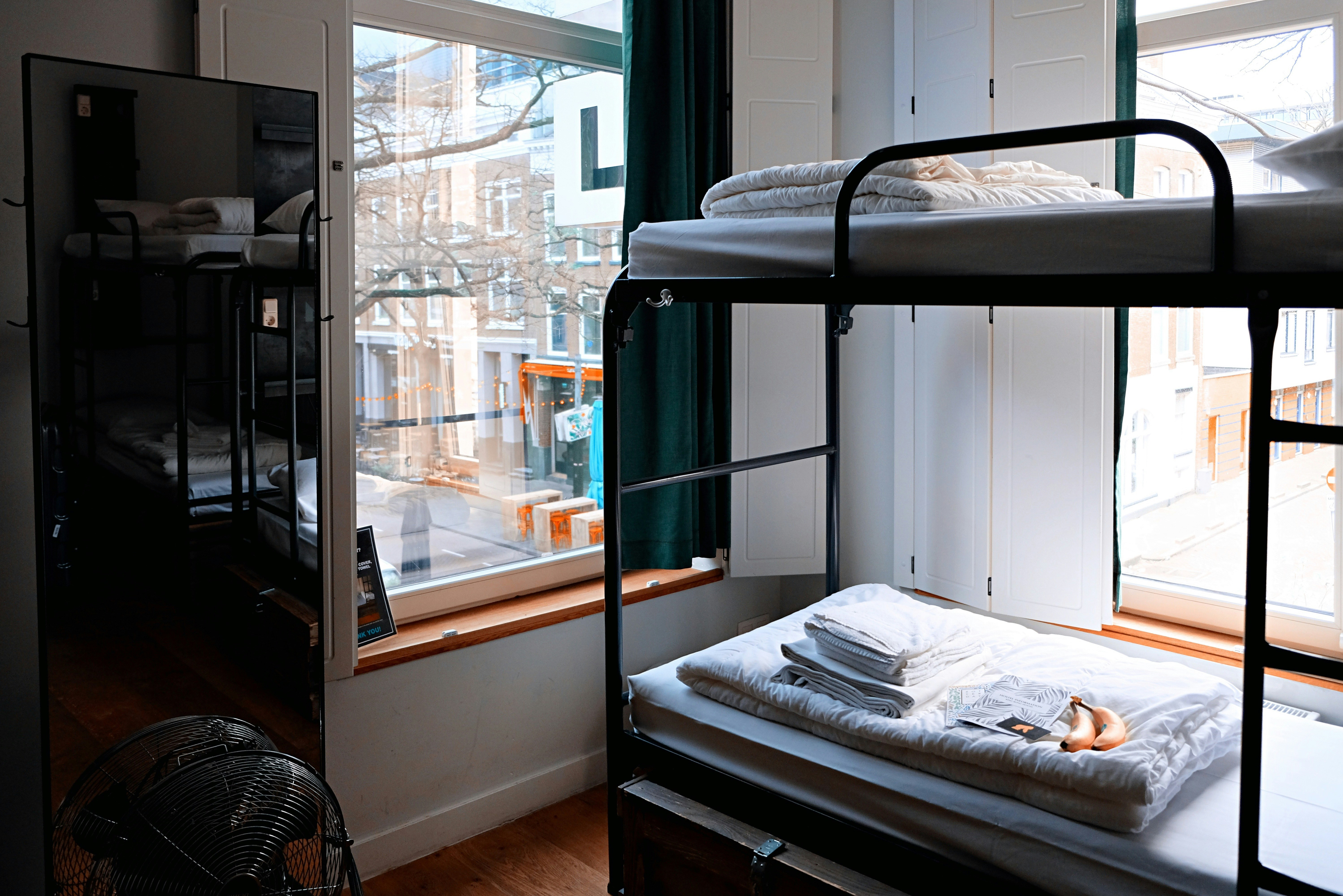
Bed layout: check whether children will have proper beds, bunk beds or a sofa bed.
Lift access: some historic buildings have a lift but still require guests to use stairs at the entrance.
Kitchen facilities: a kitchenette may mean little more than a microwave, small fridge and sink rather than a complete cooking area.
Noise: read recent reviews and request an interior-facing room when staying in a busy central district.
Pushchair access: inspect the gradient and surface of the final few hundred metres between public transport and the accommodation.
Pool rules: hotel pools may be seasonal, unheated or have limited access hours for children.
Family rooms often sell out first, especially during Easter, summer and school holidays. Book early and, when possible, choose a flexible rate.
For larger families or longer stays, an aparthotel with a separate bedroom and kitchen is often more practical than booking two standard hotel rooms.
If you expect to use buses, trams and the metro frequently, compare the available options in our guide to the Lisbon 24-hour transport ticket.
Final recommendation
Choose Baixa for the easiest first visit, especially if you are travelling with a pushchair. Pick Chiado for a central address with better dining and more atmosphere if you can manage the slopes.
For a calmer and more local stay, choose Estrela or Campo de Ourique. Belém works well for riverside space and museums, while Parque das Nações is the strongest option for modern infrastructure, swimming pools and attractions for younger children.
The best area to stay in Lisbon with your family ultimately depends on your children’s ages, the length of the trip and whether you value sightseeing, space or quiet most.
Frequently asked questions
1. What is the best area to stay in Lisbon with family?
Baixa is the best all-round area for most first-time family visits because it is central, comparatively flat and well connected. Chiado has more atmosphere but steeper streets, while Estrela and Campo de Ourique suit families looking for a quieter stay.
2. Is Lisbon easy with a pushchair?
Lisbon is manageable with a pushchair, but hills, cobbles and stairs make some routes difficult. Baixa, Belém and Parque das Nações are among the easiest areas. A compact pushchair and baby carrier can be useful when exploring Alfama.
3. Is a hotel or apartment better for families in Lisbon?
A hotel is convenient for a short stay because breakfast, reception services and luggage storage simplify the trip. An aparthotel is often better for longer visits, larger families and younger children who benefit from a kitchen and separate sleeping space.
4. How many days should a family spend in Lisbon?
Three full days are enough to explore the historic centre, Belém and one or two family attractions without rushing. Four or five nights allow for a slower pace and make it easier to include one of the best day trips from Lisbon by train, such as Sintra or Cascais.

Rafael Rocha
The Author
Having lived and studied in Lisbon for many years, a deep connection to the city grew naturally over time. Here I share practical guides and local recommendations to help you experience Lisbon better.